By Dr Kaewkamol Karen Pitakdumrongkit, Executive Director, PECC International Secretariat1
Introduction
The State of the Region (SOTR) report has long provided assessments of the economic outlooks and the region’s challenges as well as practical policy recommendations through the views of the Asia-Pacific policy community. The 2026-2027 edition continues this practice at a time of persistent uncertainty due to compounding factors ranging from rising protectionism and geopolitical tensions to energy crisis and supply chain disruptions. Against this backdrop, pressing questions arise. Among them are: “What are the prospects for economic growth in the Asia-Pacific?”; “What risks are most likely to hinder the growth prospects?”; and “What priorities should APEC Leaders undertake to strengthen the region’s resilience and shared prosperity?”
Besides the economic outlooks, this edition examines “AI Adoption in the Asia-Pacific: Pathways to Economic Opportunities” as its central theme.2 AI has rapidly moved from a specialized technology to a widely used tool, with applications extending across business operations, research, policymaking, and everyday activities. Asia-Pacific is at the forefront of this transformation, but adoption is unfolding across economies at different stages of economic and technological development. These differences are producing varied patterns of use, opportunity, preparedness, and risk, making it important to understand not only how AI is being adopted across the region, but also what may enable or hinder its effective, responsible, and inclusive deployment.
To shed light on these issues, the Pacific Economic Cooperation Council (PECC) conducted an annual opinion survey of more than 500 individuals across 23 economies from June to August 2026. The survey draws on the “panels” comprising respondents from government, business, research, civil society, and the media selected on the basis of their expertise in and influence on policymaking. Further details on the methodology are provided in Annex A.
It should be noted that rather than replacing existing research, our survey and analysis complement the latter by offering a useful baseline for understanding regional trends, identifying common challenges, and highlighting areas of policy convergence and divergence. More broadly, this SOTR aims to contribute to policy discussions on regional issues such as innovation, digital transformation, productivity growth, competitiveness, and structural reform as economies are increasingly exposed to the opportunities and challenges posed by multiple factors including AI.
Chapter 1 is organized as follows. First, it presents the findings from PECC’s opinion survey of the Asia-Pacific policy community with regard to economic outlooks, risks to economic growth, and priorities for APEC Leaders. It then highlights the key findings focusing on AI adoption, ranging from enablers and hindrances, impacts and risks, economies’ preparedness, and priorities for regional AI cooperation. The findings are presented both in aggregate and with breakdowns by subregion, affiliation, gender and age group where appropriate, offering additional insights for policymakers as they shape future strategies.
In a nutshell, the survey reveals that regional stakeholders are overall more optimistic about the outlook for the regional economy than the global economy. However, they identify important risks to growth, especially: increased protectionism and trade wars; supply chain disruptions; inflation; inability to adapt to rapid technological change and AI and mitigate risks posed by them; and climate change. Reflecting these concerns, respondents see ameliorating the risks caused by increased protectionism and trade wars; boosting supply chain resilience and efficiency; lowering geopolitical tensions; facilitating the adoption of emerging technologies and AI and managing risks arising from these technologies; and enhancing energy resilience by diversifying sources and accelerating green transition as top priorities for APEC Leaders.
Regarding AI adoption, the survey suggests that AI is being applied to several tasks ranging from streamlining workflows to enabling physical movements. The technology is already contributing to higher productivity, efficiency, and innovation, while its impact on recruitment, layoff, and changes in job profiles remains limited. The findings reveal key factors affecting the pace of AI adoption such as: digital skills; costs of supporting information and communication technology (ICT) infrastructure, computing capacity, and AI applications; organizational leadership support (or lack thereof); and governments’ AI policies. Despite AI adoption, respondents report concerns over cyberattacks, scams, and frauds; data privacy concerns; mistakes caused by AI; risks arising from AI limitations; and biases and discrimination caused by model algorithms. The findings also reveal uneven levels of preparedness across Asia-Pacific economies in areas such as digital infrastructure, cybersecurity, workforce development, and AI safety and ethical frameworks. In addition, regional stakeholders identify key priorities for AI cooperation under APEC: tackling AI-enabled cyberattacks, scams, and frauds; reskilling and workforce transition programs; facilitating investment in digital connectivity and energy infrastructure to support AI infrastructure; AI safety and risk governance cooperation; and interoperability of data including digital standards.
Regional Economic Outlook
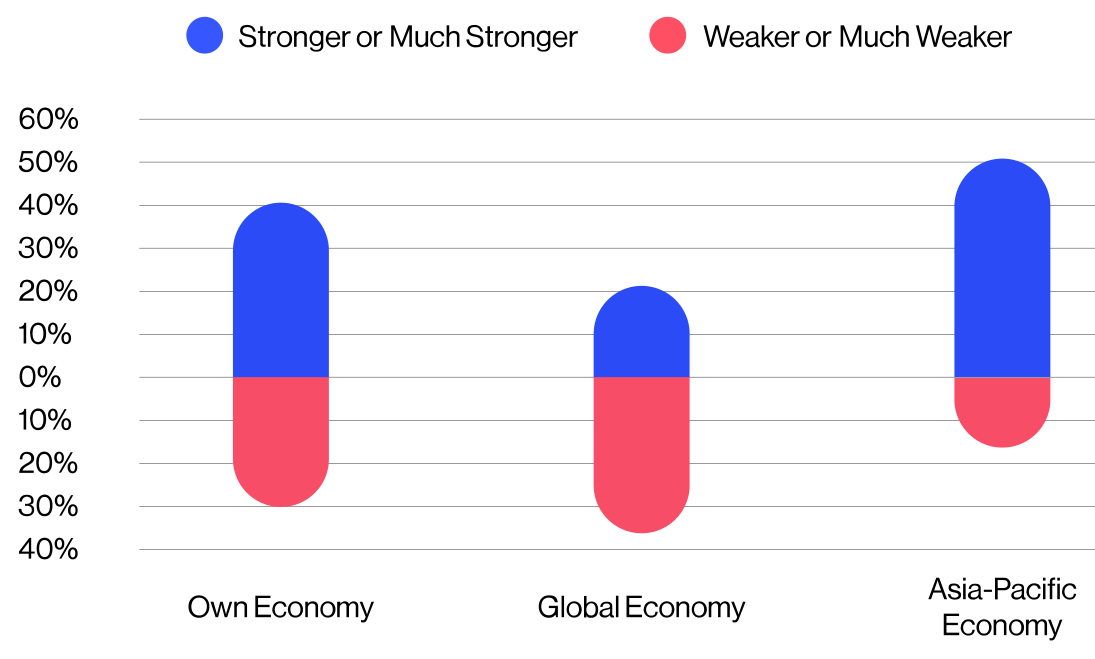
PECC’s opinion survey shows that respondents’ views differ in their assessment of the growth prospects of different economies in the next few years (Annex A, Question 1). Respondents expressed strongest optimism when assessing the outlook for the broader Asia-Pacific economy, followed by their own economies. According to Figure 1.1, more than half of them anticipate regional growth to be stronger or much stronger, and only 16% think it will be weaker or much weaker. About 40% of them expect growth of their own economy to be stronger or much stronger over the next two to three years, vis-à-vis 30% who anticipate weaker or much weaker expansion. In contrast, perceptions for global economic prospects are more cautious. Only 21% of respondents expect global growth to be stronger or much stronger and 36% anticipate weaker or much weaker conditions.
Figure 1.1: Growth Expectations for Own Economy, Global Economy and Asia-Pacific Economy in the Next 2-3 Years
Source: PECC State of the Region Survey 2026
The stronger confidence in the Asia-Pacific economy is consistent with other analyses. Despite ongoing headwinds from protectionism, geopolitical tensions, and supply chain disruptions, the regional economy is better positioned to expand thanks to stronger underlying economic fundamentals and new growth drivers. Supported by firm domestic demand, strong performances of technology-related industries, the Asian Development Bank (2026) projects that developing Asia and the Pacific will grow about 5.0% and 5.1% in 2026 and 2027 respectively. 3 Likewise, the World Bank (2026) estimates the global economic growth of 2.5% in 2026, rising modestly to 2.8% in 2027 and 2028, East Asia and Pacific economies are forecasted to outperform the global average by expanding between 4.2% and 4.4% over the same period.4
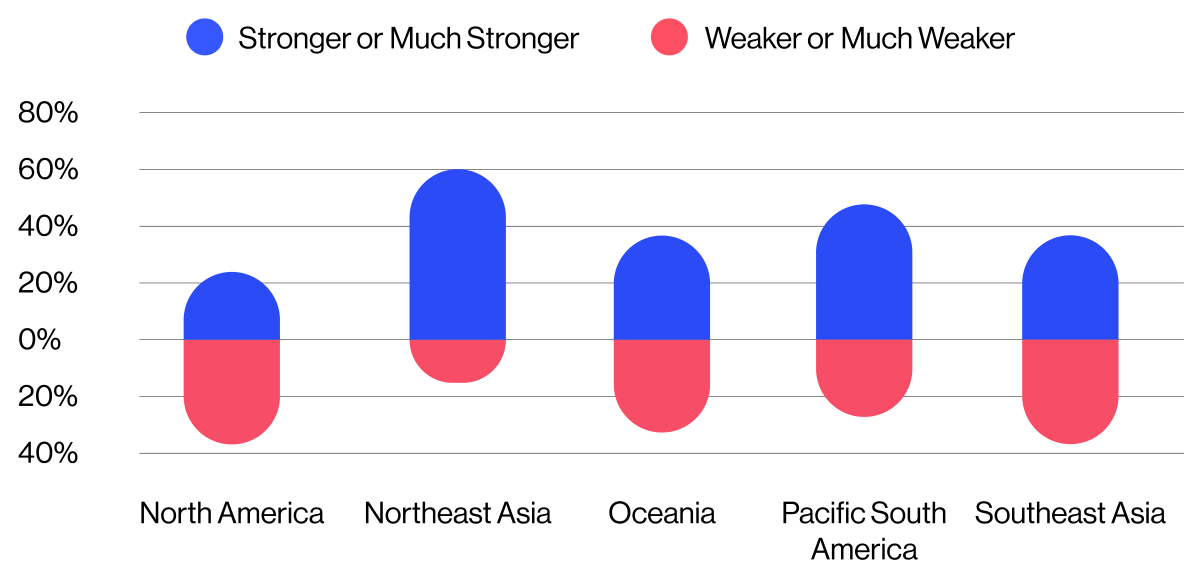
Subregional breakdowns of growth expectations for own economy reveal divergences in opinions (Figure 1.2). Approximately 60% of Northeast Asian participants expect their economy to be stronger or much stronger in the next few years. This relative optimism is consistent with the United Nations Trade and Development (UNCTAD)’s analysis that East Asia served as a main engine of global trade growth in the first quarter of 2026, thanks to strong import and export performance.5 In contrast, about 37% and 36% of individuals from North America and Southeast Asia respectively believe their economy will be weaker or much weaker in the same period. While these respondents are more cautious, the underlying reasons may differ. The views of North American participants may reflect worries about trade policy uncertainty and elevated public debt. For instance, the International Monetary Fund (IMF) noted that the US government debt rose to 123.9% of its GDP, hampering business confidence and private investment.6 Tensions over the review and renewal of the United States-Mexico-Canada Agreement (USMCA) further cloud the growth prospect. As for Southeast Asian counterparts, their opinions reflect concerns that the subregion is highly exposed to global economic uncertainty. These economies are trade-dependent and well-embedded in global value chains. Several of them are net energy importers and hence are vulnerable to energy shocks and price volatility caused by conflicts in the Middle East. These elements worsen inflation, weaken consumption, and dampen economic activities and growth.
Figure 1.2: Growth Expectations for Own Economy in the Next 2-3 Years, by Subregion
Source: PECC State of the Region Survey 2026
2. Risks to Growth
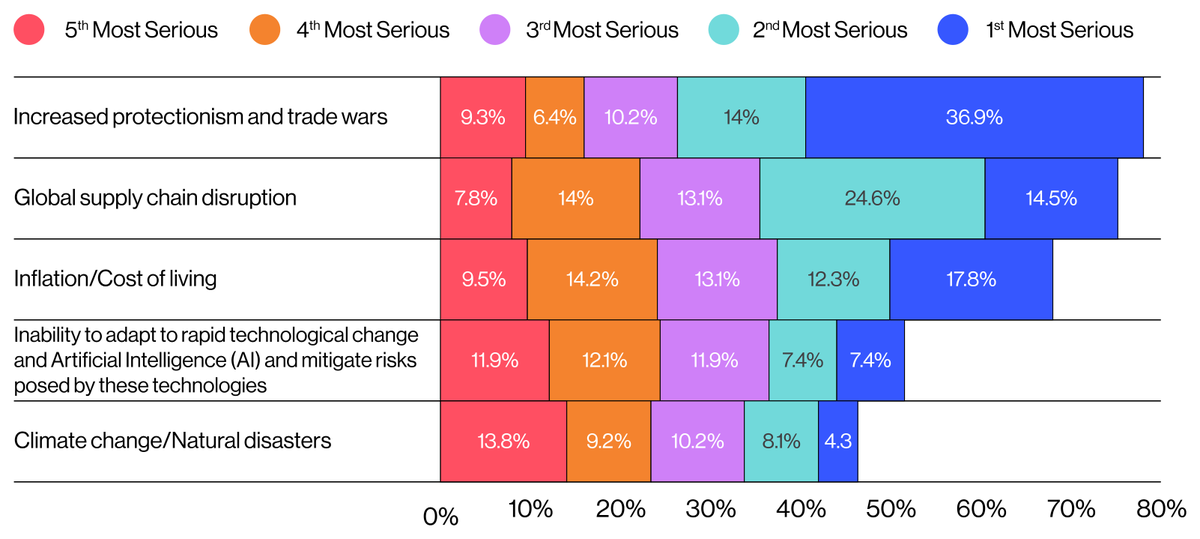
Participants in our survey panels identify five major risks that could undermine economic growth in the next few years (Annex A, Question 2). In descending order of seriousness, the risks are: increased protectionism and trade wars; global supply chain disruption; inflation/cost of living; inability to adapt to rapid technological change and AI and mitigate risks posed by associated technologies; and climate change/natural disasters (Figure 1.3).
Figure 1.3: Top 5 Risks to Growth
Source: PECC State of the Region Survey 2026
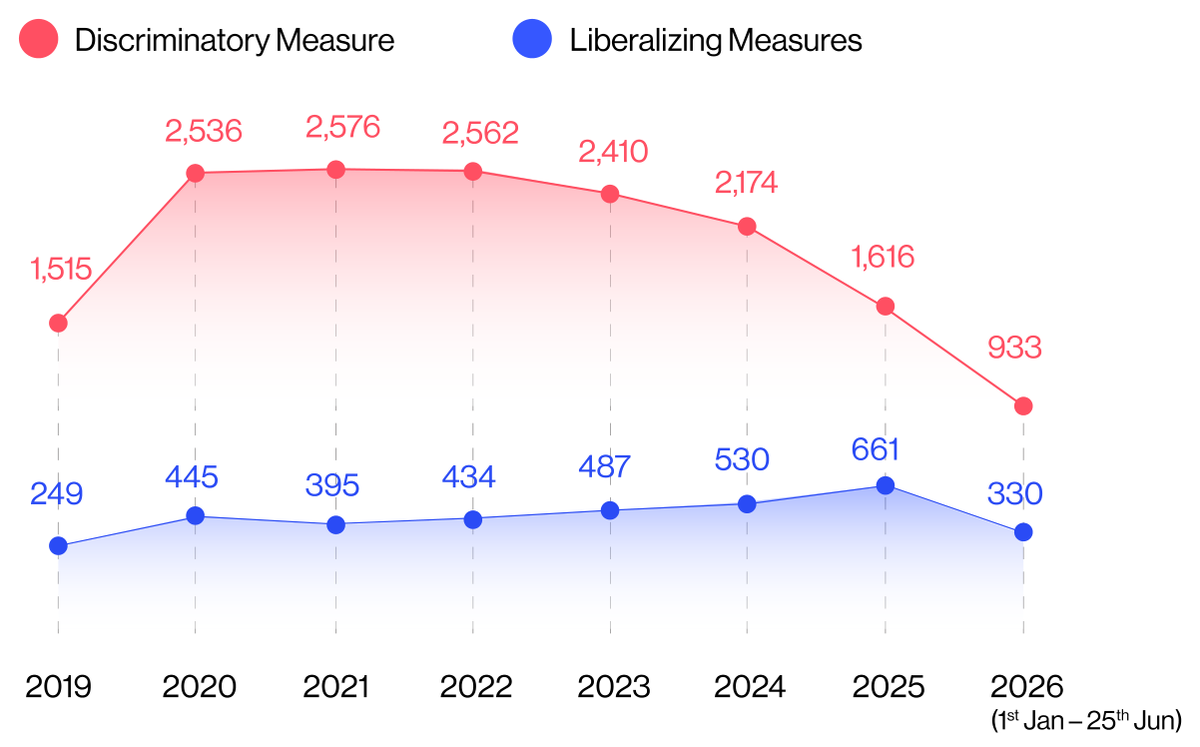
“Increased protectionism and trade wars” is identified by approximately 77% of respondents as a risk to their economic growth. It also emerges as the most serious threat, with about 37% selecting it (Figure 1.3). The finding is partly explained by growing concerns over the expansion of discriminatory trade measures (Figure 1.4). Within Asia-Pacific, a total of 19,853 policy interventions were recorded from January 2019 to June 2026. This number comprises 16,322 discriminatory measures and 3,531 liberalizing ones, or a protectionism ratio of 4.62 discriminatory policies for every liberalizing policy. In short, the former has outnumbered the latter by more than fourfold.7
Figure 1.4: Number of New Trade Policy Measures in the Asia-Pacific, 2019-20268
Global Trade Alert Database
Moreover, the World Trade Organization (WTO)’s analysis pointed to a less predictable trading environment, noting that the share of trade conducted under most-favored-nation (MFN) principle declined from 80% at the start of 2025 to 72% by the end of February 2026.9 For Asia-Pacific economies intertwined in cross-border trade and investment networks, protectionism can raise production costs, discourage investment, and weaken business confidence. These spillover effects often extend beyond the sectors directly targeted by protectionist measures. This partly helps explain why surveyed participants identify “increased protectionism and trade wars” as the most serious threat to economic growth.
“Global supply chain disruption” is cited by 74% of respondents as a risk to growth (Figure 1.3). The nature of disruption has also evolved. Unlike during the COVID-19 pandemic when disruptions largely reflected widespread shocks to production and logistics, recent interruptions have increasingly been associated with instability of key transportation chokepoints and government measures used to gain leverage in transactional bargaining processes. In other words, the overall pressure has eased since the pandemic peaks, yet the Global Supply Chain Pressure Index10 shows signs of elevated strains around April 2026, indicating continued vulnerabilities. The UNCTAD cited interrupted regional logistics, shipping routes, and supply chains as downside risks to economic activities.11 This is particularly relevant to Asia-Pacific economies which are well-embedded in cross-border supply chains. Disruptions at one stage of production networks can delay deliveries, increase shipping and inventory costs, and limit access to critical inputs.
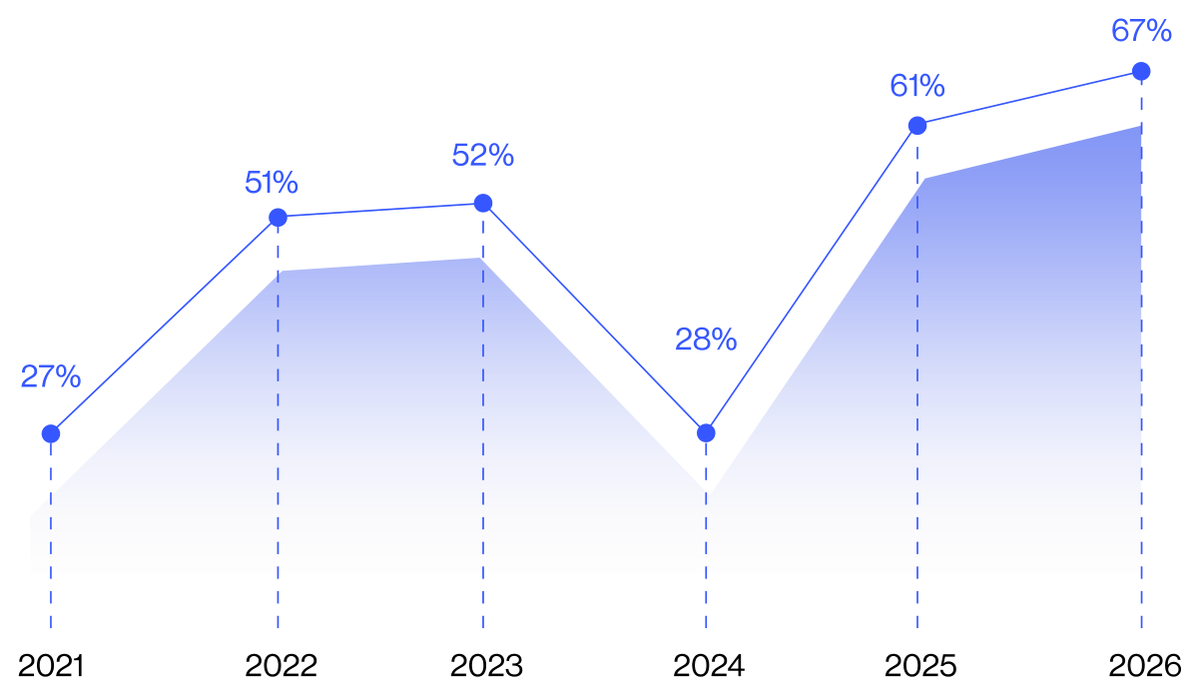
“Inflation/Cost of living” is seen by 67% of respondents as jeopardizing the economic growth in the next 2-3 years (Figure 1.3). This may reflect persistent upward pressure recently on the cost of living, partly driven by higher global energy costs, fuel and fertilizer shocks and disrupted shipping routes. The IMF documented that the higher oil and gas prices push up inflation in Asia and the Pacific, weakening external balances and limiting governments’ policy space especially in economies dependent on imported energy. The growth effect is therefore two-sided: higher prices reduce households’ purchasing power, while tighter monetary conditions and fiscal constraints can weaken consumption and investment.12 Against this backdrop, PECC’s survey data comparison over time confirms that concern about inflation has risen, with 2026 registering the highest proportion of respondents identifying it as a risk to growth (Figure 1.5).
Figure 1.5: Share of Respondents Citing “Inflation” as Risk to Growth
PECC State of the Region Survey, annual, 2021 - 2026
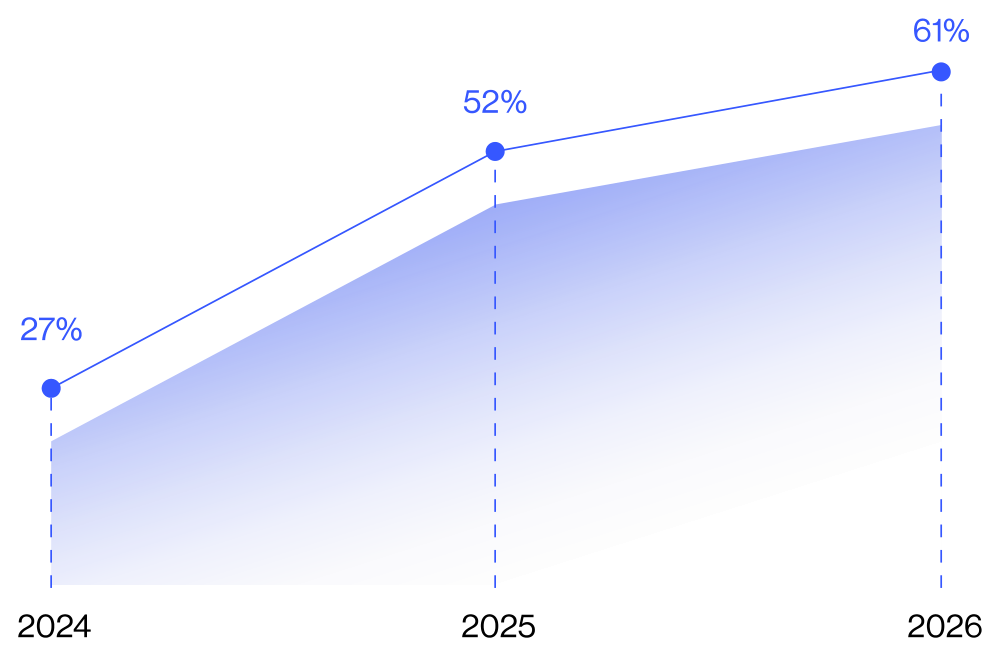
More than half of respondents (about 51%) selected “Inability to adapt to rapid technological change and Artificial Intelligence (AI) and mitigate risks posed by these technologies” as a risk to their economic growth (Figure 1.3). A review of PECC’s survey data over the last three years shows that 2026 has the greatest percentage of respondents seeing the issue as dampening growth (Figure 1.6). The results may reflect regional stakeholders’ concern that the benefits of these technologies may be unevenly distributed. Economies with less digital infrastructure, limited access to affordable computing capacity, and shortage of digitally skilled workers may find it more difficult to adopt and benefit from these technologies. Such worry is consistent with recent research revealing that AI adoption could entail economic divergence across the Asia-Pacific. In other words, advanced economies with greater digital readiness and institutional capacity tend to adopt AI earlier and realize productivity and growth gains more quickly than emerging markets and developing economies.13
Figure 1.6: Share of Respondents Citing "Inability to Adapt to Rapid Technological Change and Artificial Intelligence (AI) and Mitigate Risks Posed by These Technologies" as Risk to Growth
Source: PECC State of the Region Survey, annual, 2024 - 2026
In addition, approximately 46% of the members in the survey choose “Climate change/Natural disasters” as a risk to growth (Figure 1.3). Such concern is understandable given Asia-Pacific economies’ exposure to extreme weather and dependence on trade, tourism and other climate-sensitive sectors (e.g. agriculture). In 2025, Asia recorded 175 natural hazard-related disasters, more than the Americas (93), Africa (63), Europe (22), and Oceania (5), and accounted for 72.8% of global disaster-related fatalities.14 This year, Asia-Pacific has been enduring the impact of a “super” El Nino in the form of droughts, heat, increased storms, and flooding, among others. Recent wildfires in Indonesia and floods in China, Malaysia and Thailand illustrate how climate-related shocks can disrupt economic activities, damage infrastructure, interrupt trade and supply chains, and put pressure on public finances. These issues are echoed in the study by the United Nations Economic and Social Commission for Asia and the Pacific (UNESCAP), which identified climate-related hazards as a growing threat to economic resilience across the region. Natural disasters not only disrupt food, water, and energy systems, but also damage critical infrastructure, reduce productivity, and impose fiscal constraints on governments.15
Priorities for APEC Leaders
As shown above, Asia-Pacific continues to face a complex mix of challenges ranging from economic to technological. Against this backdrop, PECC’s opinion survey identifies a number of issues that respondents believe should be prioritized by APEC Leaders (Annex A, Question 3). In descending order of priorities, the top 5 ones (with shares of respondents selecting it) are:
- Ameliorating the risks caused by increased protectionism and trade wars (72.8%)
- Boosting supply chain resilience and efficiency (71.2%)
- Lowering geopolitical tensions (70.2%)
- Facilitating the adoption of emerging technologies and AI and managing risks arising from these technologies (67.5%)
- Enhancing energy resilience by diversifying sources and accelerating green transition (59.7%)
These priorities together echo the regional stakeholders’ demand for APEC to protect the foundations of regional growth as well as adapt to new growth drivers. The first three priorities focus on preserving openness, predictability, and resilience in the regional economy. The fourth and fifth ones focus on preparing economies for future structural change.
“Ameliorating risks from protectionism and trade wars” emerges as the No. 1 priority, selected by about 73% of them (Annex A, Question 3). This is consistent with the results of risks to growth, where “Increased protectionism and trade wars” is named as the most serious threat. The fact that this priority is identified as among top 3 priorities for APEC Leaders by respondents in all subregions (Figure 1.8) indicates that managing the consequences of growing protectionism is seen as a region-wide effort, reinforcing the importance of APEC as a cooperation platform fostering an open and rules-based trading environment. The significance of the issue is notable given APEC’s long-standing commitment to promoting an open, dynamic, resilient and peaceful Asia-Pacific community as outlined in the Putrajaya Vision 2040. APEC economies are pursuing initiatives advancing regional economic integration such as the Free Trade Area of the Asia-Pacific (FTAAP) agenda, where PECC has contributed policy ideas on how to advance it in the areas of services professional mobility, good regulatory practices, and trade and climate change.16 At the 33rd PECC General Meeting in May 2026, panelists identified digital trade, customs modernization, sustainability, AI applications, environmental goods, and regulatory transparency as promising areas for future collaboration.17
“Boosting supply chain resilience and efficiency” comes in as No. 2 priority, chosen by 72% of respondents (Annex A, Question 3). The finding speaks to APEC’s important role in addressing cross-border supply chain chokepoints and enhancing region-wide trade facilitation and connectivity. This agenda is pursued through various programs such as APEC Supply Chain Connectivity Framework Action Plan 2022-2026 (SCFAP III), APEC Roadmap for Innovative, Competitive and Resilient Services (ARICRS), and work on paperless trade. To support APEC’s work in this area, PECC has undertaken research on connectivity and offered practical policy solutions to improve digital and physical connectivity and interoperability of technical standards. One example is PECC’s project on “Enabling AI for Trade Facilitation in the APEC Region” where experts examined how AI and broader digitalization can help align trade processes and strengthen supply chain efficiency and resilience.18
“Lowering geopolitical tensions” is ranked as No. 3 priority. Around 70% of respondents identify it (Annex A, Question 3). This underscores the significance of APEC as a trusted discussion platform, even though its key objective is to advance regional economic cooperation and integration. In other words, although APEC is not a security forum, the survey findings reflect firm recognition of its role in convening regular meetings (some are informal and on the margins of APEC gatherings) among Asia-Pacific officials even in the periods of heightened strategic competition. By sustaining dialogue and promoting practical economic cooperation, APEC helps preserve channels of communication where involved players can exchange ideas, voice concerns, enhance mutual understanding, and build confidence, thereby helping to lessen geopolitical tensions.
The fourth-ranked priority is “Facilitating the adoption of emerging technologies and Artificial Intelligence (AI) and managing risks arising from these technologies”, with about 68% of members in the survey panel selecting it (Annex A, Question 3). The result is consistent with the finding above that more than half of them view “Inability to adapt to rapid technological change and Artificial Intelligence (AI) and mitigate risks posed by these technologies” as a risk to growth. This suggests that regional stakeholders view these matters not only as technical but also key determinants of the region’s future competitiveness, growth, and development. While APEC has undertaken work in this area through various programs such as APEC Internet and Digital Economy Roadmap (AIDER) and APEC Artificial Intelligence (AI) Initiative (2026-2030), the survey findings reflect regional stakeholders’ demand for deeper collaboration. This resonates with the discussions at the PECC AI Event held on the margins of APEC Third Senior Officials’ Meeting in August 2026. The participants identified several areas where further collaboration is needed, including digital skills development, AI risk management, trusted and reliable information-sharing, and crisis-response mechanisms for APEC economies to jointly address AI-enabled trade and supply chain disruptions.19
Finally, “Enhancing energy resilience by diversifying sources and accelerating green transition” ranks as the fifth-highest priority, with approximately 60% of respondents selecting it (Annex A, Question 3). Viewed alongside the finding above that “climate change/natural disasters” is among top 5 risks to growth, this result suggests that regional stakeholders increasingly see energy resilience not only as an environmental objective, but also as a building block of economic resilience. APEC has already taken steps in this direction. Some examples include the Bangkok Goals on Bio-Circular-Green (BCG) Economy, Sustainable Finance Initiative, and Just Energy Transition Initiative (JETI). Complementing these efforts, PECC has continued its work on energy resilience and green transition, including a report examining AI-powered sustainable solutions and how emerging AI technologies are driving innovation across key industries.20
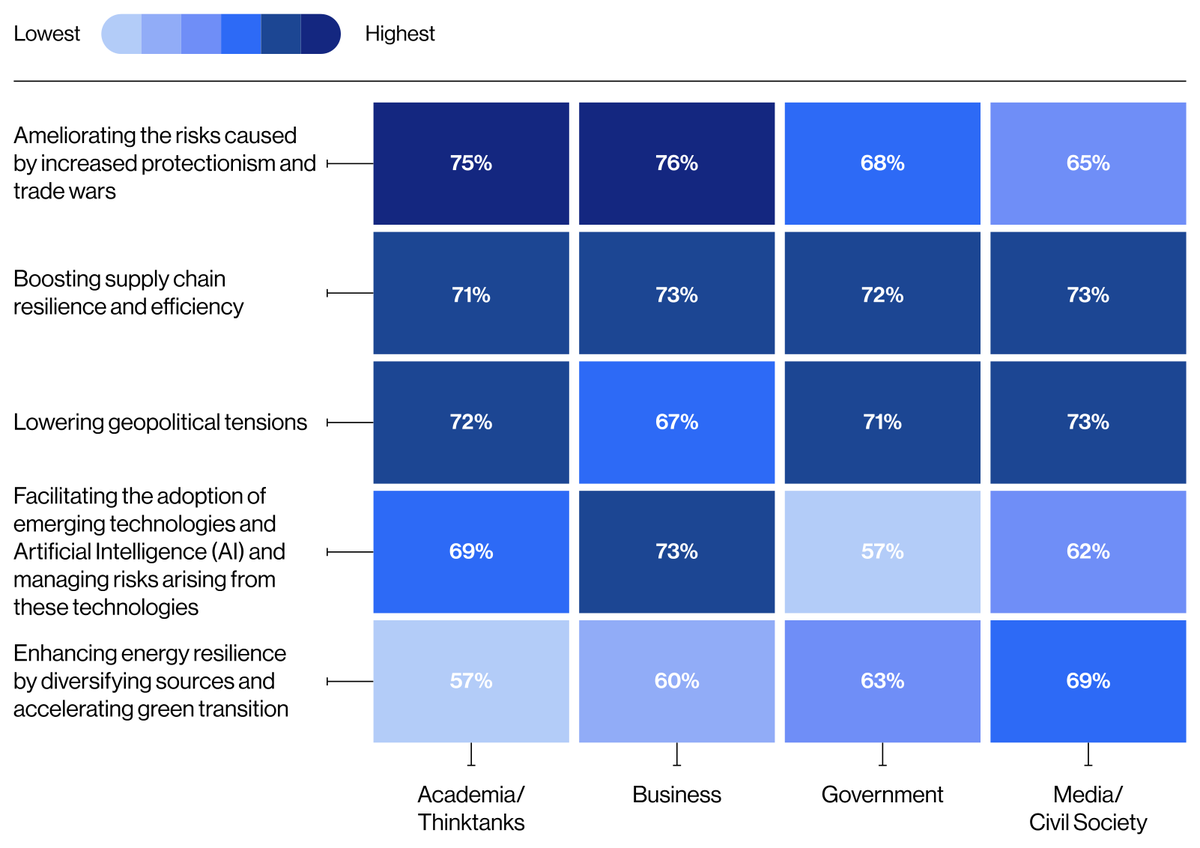
Although key priorities are shared across groups, some differences in views emerge across sectors and subregions (Figure 1.7 and Figure 1.8). They offer complementary perspectives on where action is most urgent, further informing APEC policymaking. Referring to Figure 1.7, academic/thinktank and business respondents place “ameliorating risks from protectionism and trade wars” as the No. 1 priority, reflecting their focus on the conditions conducive to cross-border trade and investment. Private sector participants place the greatest emphasis on “facilitating the adoption of emerging technologies and Artificial Intelligence (AI) and managing risks arising from these technologies”, partly stemming from their direct exposure to both opportunities and challenges from these technologies. Media and civil society respondents show relatively strong support for “enhancing energy resilience by diversifying sources and accelerating the green transition”, pointing to their greater emphasis on broader environmental dimensions of regional economic development.
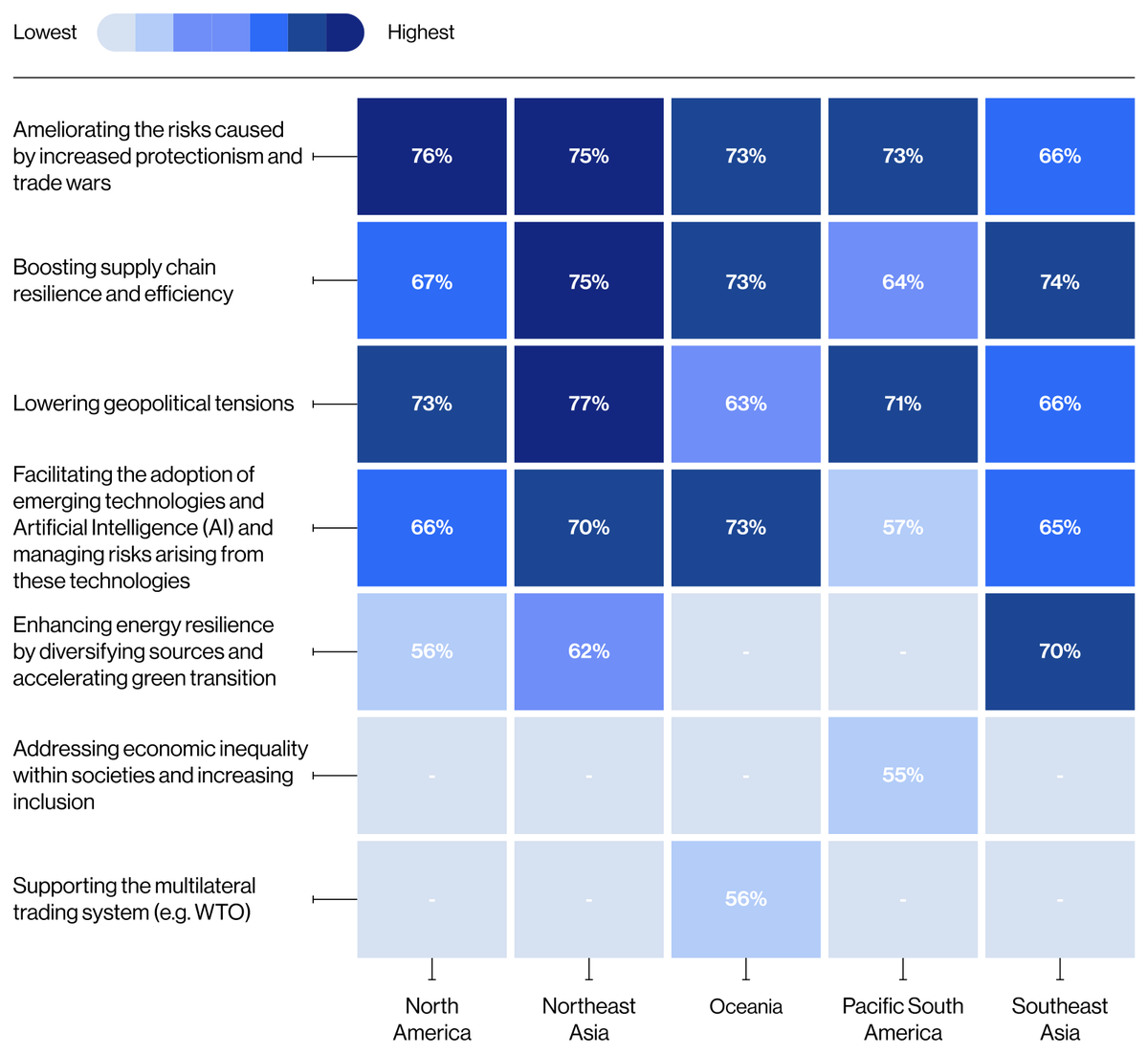
Respondents across subregions differ in their specific outcomes they seek from APEC cooperation. As shown in Figure 1.8, “supporting the multilateral trading system (e.g. WTO)” ranks among the top 5 priorities only in Oceania, selected by 56% of these respondents. This may reflect the importance that these individuals attach to a predictable and rules-based trading system. Also, “addressing economic inequality within societies and increasing inclusion” appears among the top 5 priorities only in Pacific South America, chosen by 55% of these participants. This may indicate that concerns about the distribution of the gains from Asia-Pacific economic cooperation are salient in the subregion.
Figure 1.7: Top 5 Priorities for APEC Leaders, by Affiliation
Source: PECC State of the Region Survey 2026
Figure 1.8: Top 5 Priorities for APEC Leaders, by Subregion
Source: PECC State of the Region Survey 2026
AI Adoption in the Asia-Pacific: Pathways to Economic Opportunities
Asia-Pacific exceeds the global average in terms of AI adoption. According to one study, 78% of the region’s employees report using the technology at least once a week, as compared to 72% worldwide.21 The uptake is projected to increase over time. One study projects that the size of Asia-Pacific’s AI market will expand by US$110 billion, representing a 24% increase from 2024 to 2028.22 Against this backdrop, PECC’s opinion survey provides further insight into how regional stakeholders are engaging with AI. The following section begins by examining the patterns of AI use identified by survey respondents.
AI Adoption Patterns
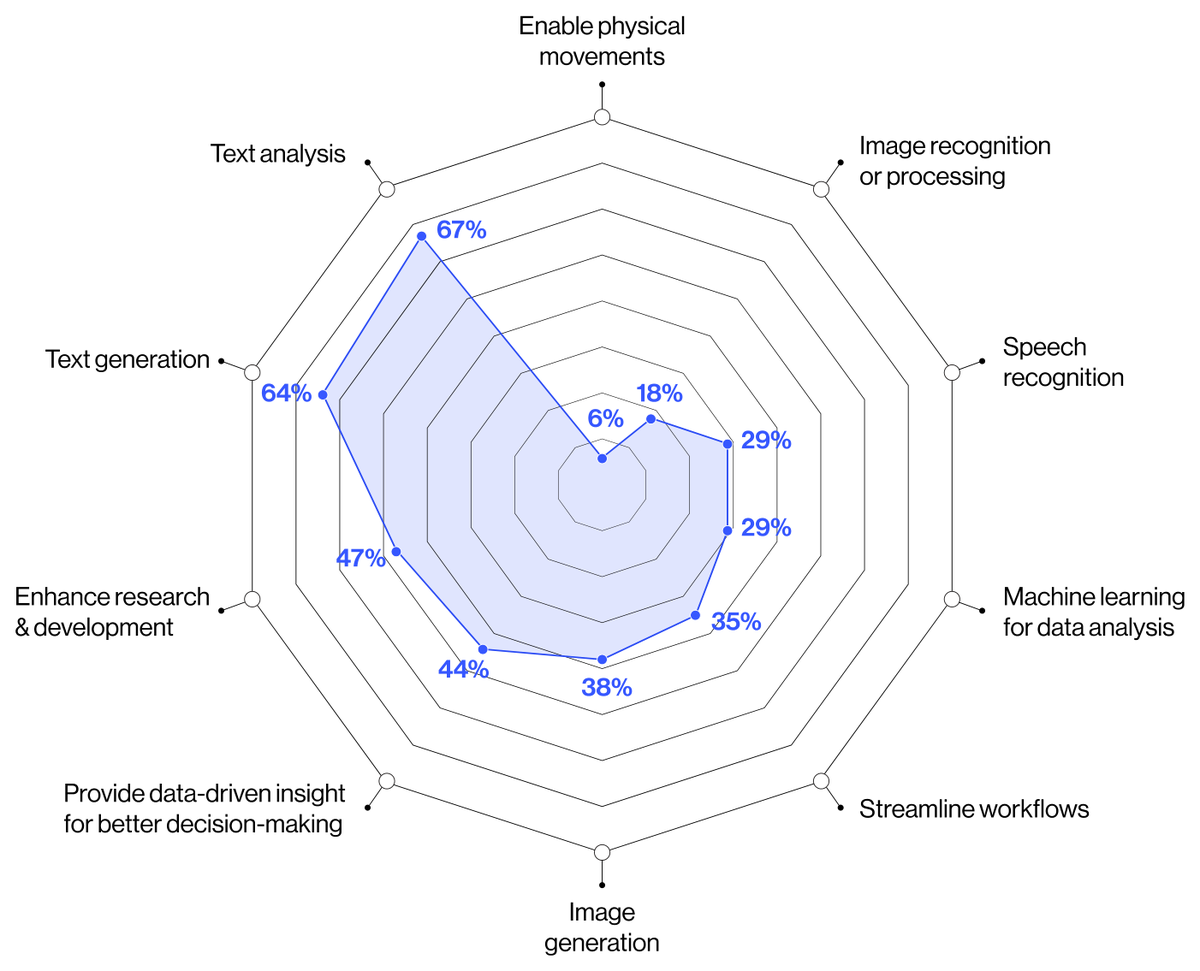
PECC’s survey reveals that regional stakeholders are using AI technologies and tools for a wide range of purposes (Annex A, Question 4). The most frequently cited uses are: analyzing texts, generating texts, enhancing research and development (R&D), providing data-driven insights for better decision-making, and generating images (Figure 1.9). These responses suggest that AI applications are increasingly being integrated into both economic and everyday activities across the region.
Figure 1.9: Uses of AI Technologies or Tools (with share of respondents selecting each use)
Source: PECC State of the Region Survey 2026
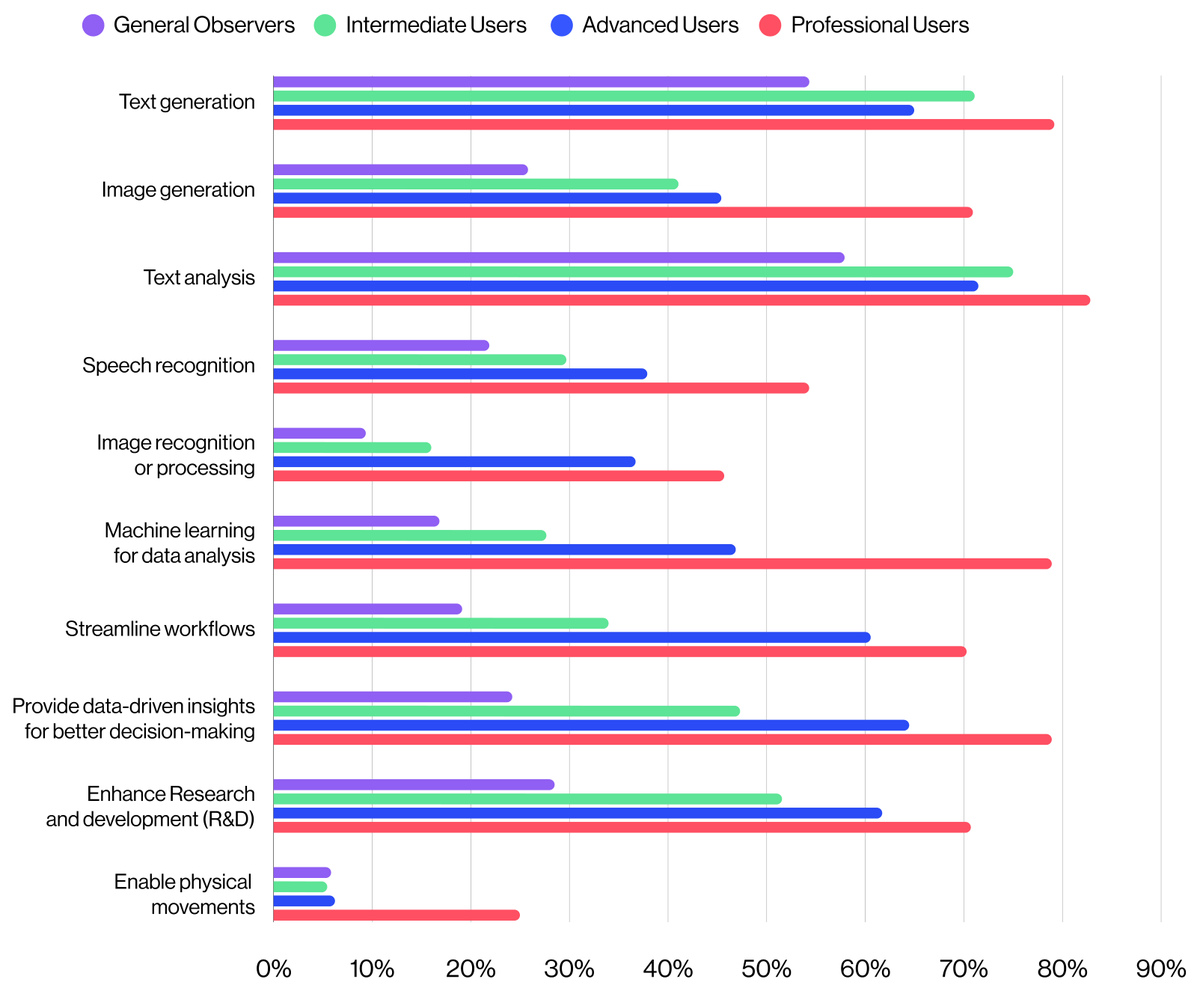
Respondents’ proficiency in digital and AI literacy was classified into four groups: (1) “general observers”, who primarily follow AI developments through news, analysis, and policy discussions); (2) “intermediate users”, who regularly use AI tools for specific tasks and can assess their basic outputs and limitations); (3) “advanced users”, who integrate AI into complex workflows and critically assess its ethical implications, risks, and societal impact; and (4) “professional users”, who design, develop, or govern digital and AI tools and systems.23 The survey results show that individuals with higher levels (e.g. advanced users) integrate AI into their tasks in larger proportions than those with lower levels (Figure 1.10).
Figure 1.10: Uses of AI Technologies and Tools, by Level of Proficiency in Digital and AI Literacy
Source: PECC State of the Region Survey 2026
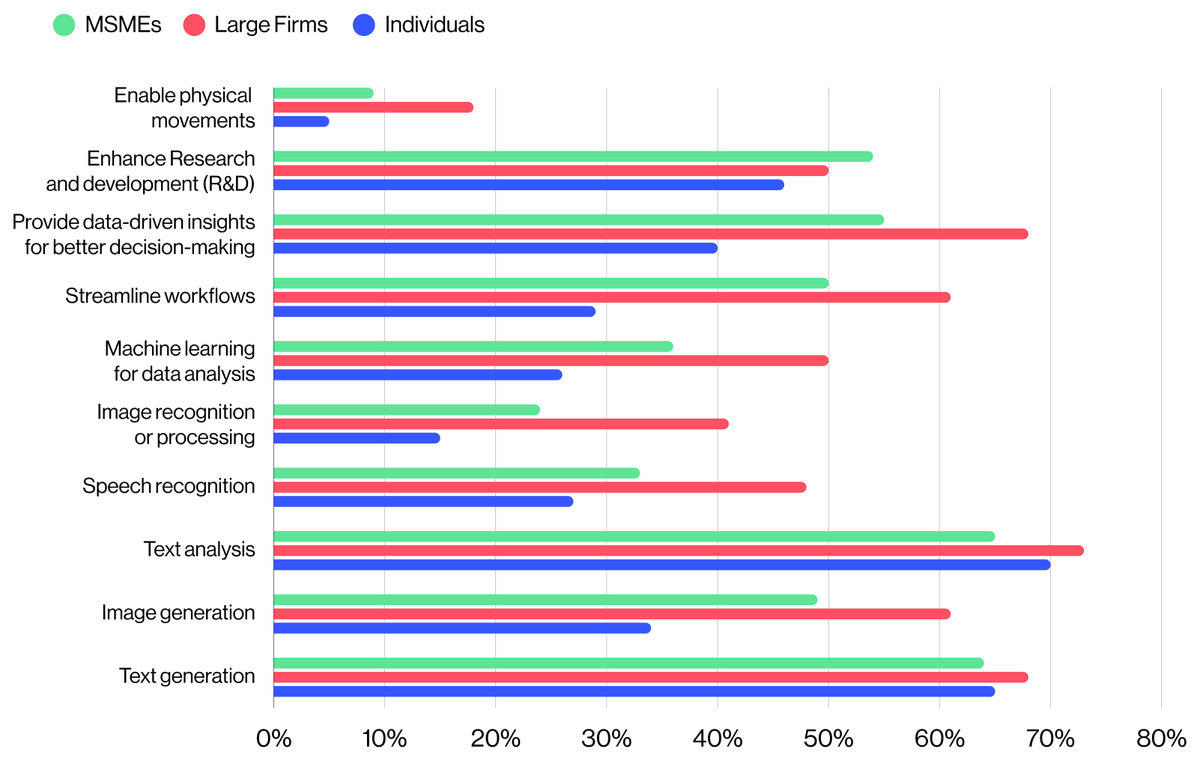
Variations in views also depend on whether AI tools are used by individuals or organizations (Figure 1.11). Those reporting from their individual perspective tend to use the technology less compared to those answering the survey from the organizational standpoint.
Figure 1.11: Uses of AI Technologies and Tools, by MSMEs, Large Firms, and Individuals
Source: PECC State of the Region Survey 2026
In addition, AI adoption varies by enterprise size. Overall, higher shares of workers in large companies incorporate AI in their work streams than their counterparts in micro, small, and medium enterprises (MSMEs). This outcome echoes PECC’s work noting that while smaller firms may have access to AI tools, they often find integrating them into business processes challenging.24 This is partly due to the costs associated with computing resources, data management, and workforce training.25 As an example, in Singapore, AI adoption in 2024 reached 62.5% among large firms but only 14.5% among MSMEs.26
How AI Changes Work and Organizations
AI is already affecting work and organizations across multiple dimensions. According to PECC’s survey, respondents report that AI is driving changes in productivity, efficiency, innovation, product and service quality, customer acquisition, market expansion, income and revenue, costs, recruitment, layoffs, and job profiles (Annex A, Question 5). For instance, approximately 75% of them report that AI has increased productivity, while about 82% cite improvements in efficiency. Around 50% indicate that AI has contributed to greater innovation, and 53% note it has enhanced the quality of their products or services. These results are broadly similar across all subregions.
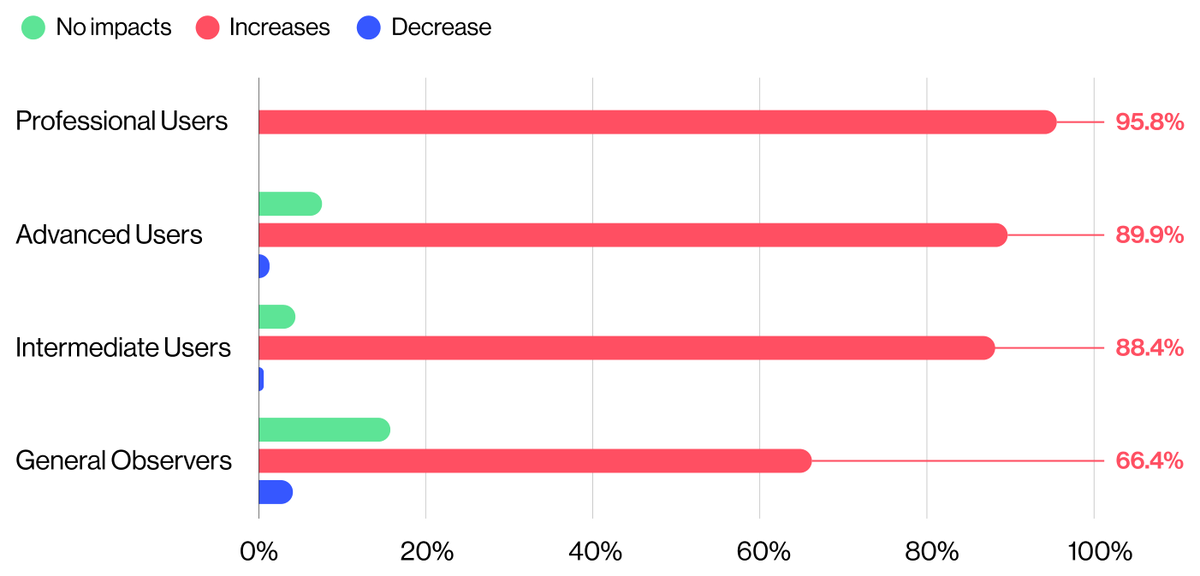
Noticeable differences regarding the consequences of AI exist across levels of proficiency in digital and AI literacy. Respondents with higher proficiency levels note the positive effects of AI at a higher proportion than those with lower levels. Illustratively, about 64%, 88%, and 90% of general observers, intermediate users, and advanced users respectively indicate AI has contributed to their increased efficiency. The proportion rises to 96% among professional users (Figure 1.12).
Figure 1.12: Shares of Respondents Reporting on the Impact of AI on Efficiency, by Level of Proficiency in Digital and AI Literacy
Source: PECC State of the Region Survey 2026
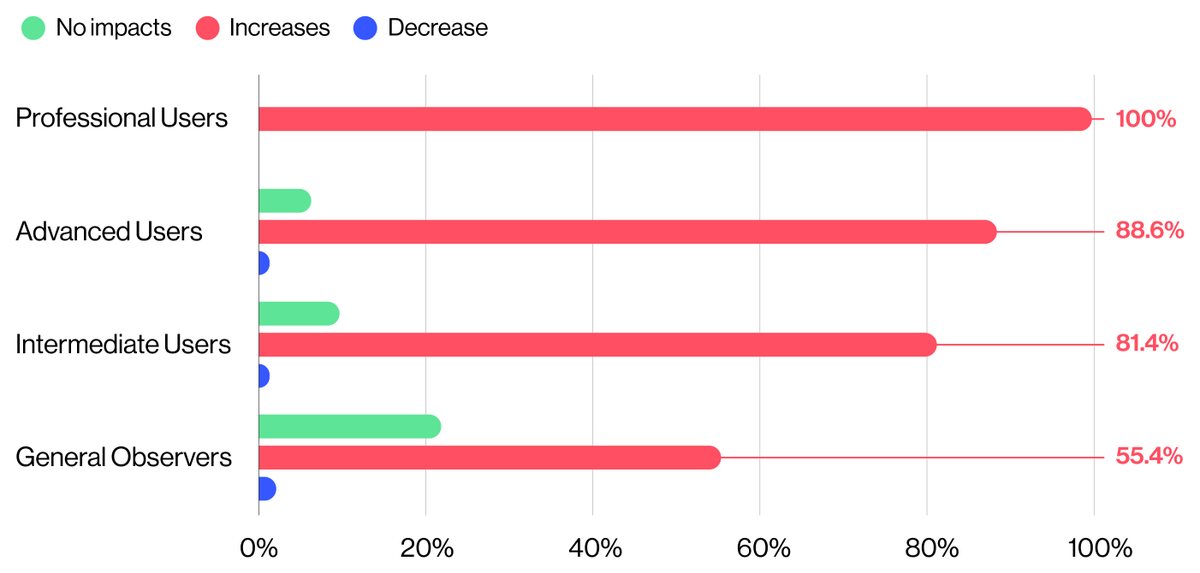
Analogous patterns are observed with regard to the impact of AI on productivity. While more than half (59%) of general observers note that AI has raised their productivity, the percentages jump to more than 80% among intermediate, advanced and professional users (Figure 1.13). These results confirm existing research suggesting that human capital determines the degree of AI-enabled productivity. In short, the greatest per-task gains occur where workers hold complementary AI and AI-related skills.27
Figure 1.13: Shares of Respondents Reporting on the Impact of AI on Productivity, by Level of Proficiency in Digital and AI Literacy
Source: PECC State of the Region Survey 2026
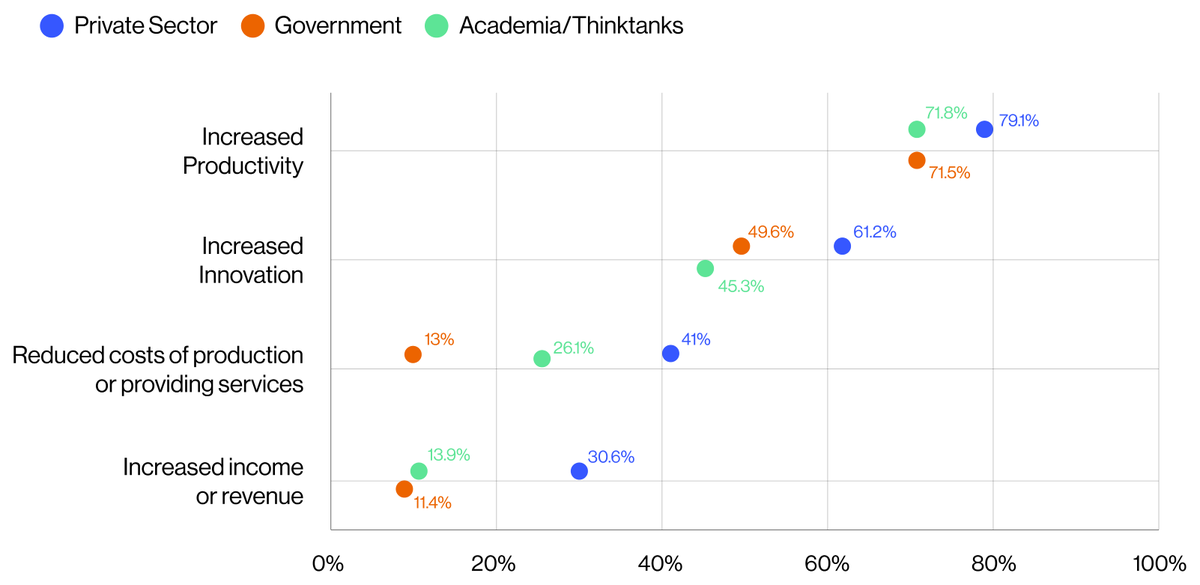
The positive effects of AI diverge across affiliations (Figure 1.14). Those from the private sector are more likely to report the impact on productivity, innovation and work processes than those from the other affiliations. Put differently, about 79% of business respondents indicate AI has raised productivity. Some 72% of respondents from government and academia/thinktanks share the same view. With respect to innovation, about 61% of business respondents report that AI boosts it as opposed to 45% and 50% of respondents from academia/thinktanks and governments respectively. Also, 41% of respondents from the private sector note that AI has reduced costs of production or providing services, but only 26% and 13% of those from academia/thinktank and public sector concur. Additionally, 31% of business respondents report that AI has raised income or revenue, as compared with only 14% and 11% of their equivalents in academia/thinktanks and governments. These results suggest that different groups can bring complementary perspectives to AI adoption. Strengthening channels for sharing business experience, policy insight, and research evidence could help support better informed approaches to AI and AI-related policymaking across the region.
Figure 1.14: Positive Effects of AI Adoption, by Affiliation
(% of Respondents Selecting Each Effect)
Source: PECC State of the Region Survey 2026
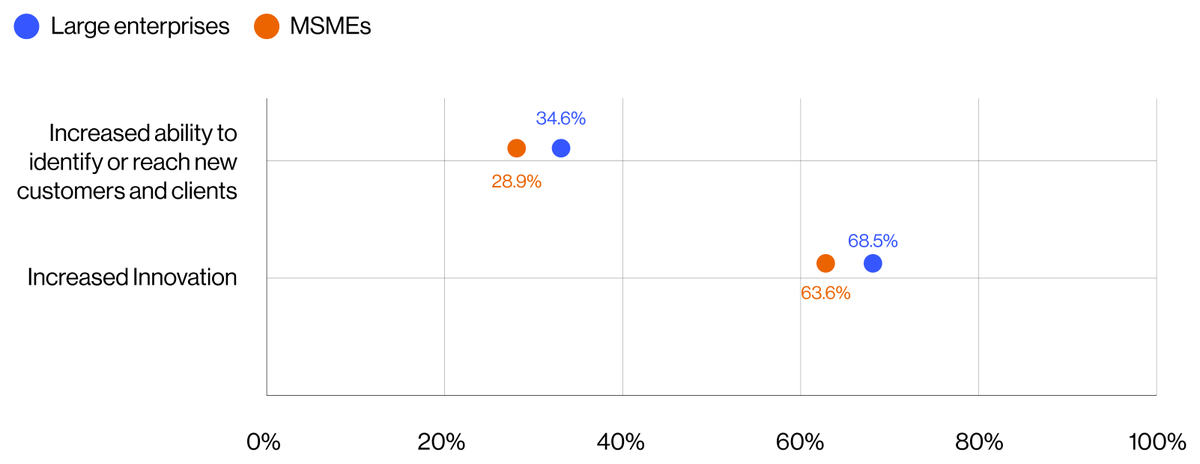
As AI is shaping business and market outcomes, the degree of gains diverges across firms’ size (Figure 1.15). For respondents answering from large companies’ perspective, about 35% of them declare that technology has improved their ability to identify or reach new customers and clients, as opposed to 29% of those working at MSMEs.28 Likewise, about 69% of the respondents from big companies indicate AI-enabled innovation, while 64% of smaller firms’ employees do so. This pattern is reflected in insights from the multi-stakeholder discussions. For instance, at the 2025 Conference on “Asia-Pacific Artificial Intelligence (AI) Governance Accelerators” highlighted that, although smaller enterprises increasingly have access to AI tools, integrating those tools into business processes often requires investments in computing resources, data management systems, and workforce training which they often lack. Discussions also highlighted grants, subsidies, and technical assistance as potential mechanisms that governments could consider supporting MSMEs in accessing and benefiting from trustworthy AI systems.29
Figure 1.15: Effects of AI Adoption on Ability to Identify or Reach New Customers and Clients and Innovation, by Firms’ Size
(% of Respondents Selecting Each Effect)
Source: PECC State of the Region Survey 2026
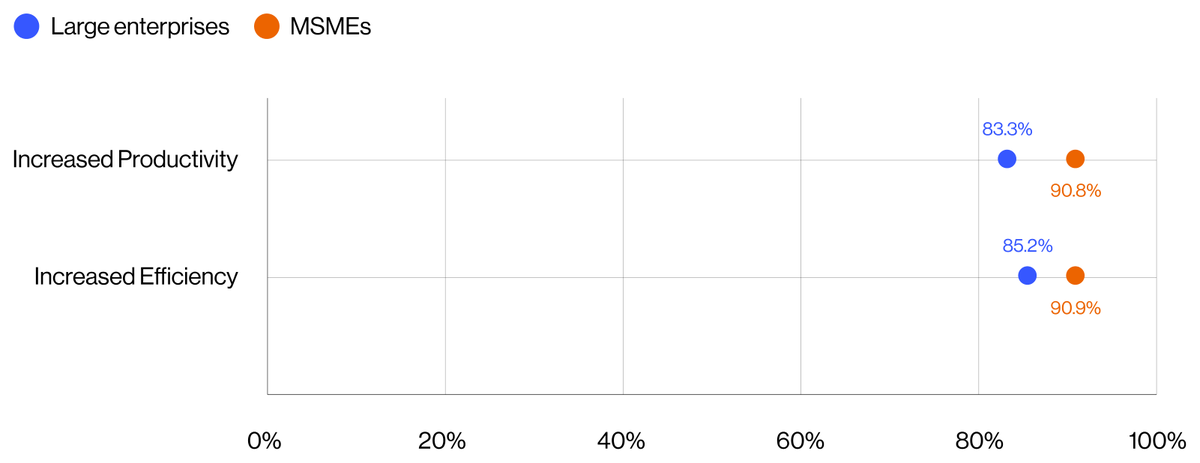
Interestingly, our survey results challenge the assumption that technology always benefits large companies to a greater extent than MSMEs. For some types of benefits, a larger share of respondents from MSMEs report gains from AI than those from large firms. For instance, about 91% of those working in MSMEs indicate that AI has boosted productivity and efficiency, as opposed to about 83-85% of their counterparts in large corporations (Figure 1.16).
Figure 1.16: Effects of AI Adoption on Productivity and Efficiency, by Firms’ Size
(% of Respondents Selecting Each Effect)
Source: PECC State of the Region Survey 2026
As for labor-market outcomes, PECC’s survey shows that the most common answers to the question about the past year’s impact of AI on recruitment, layoff, and changes in job profiles are “no impact”, followed by “don’t know/unsure” (Annex A, Question 5). This may be partly because AI is in the early stage of being integrated into workflows, so it has not yet produced significant labor market adjustments. More noticeable effects may emerge as the region is progressively embracing technology.
Factors Accelerating and Hindering AI Adoption (What Drives and Slows AI Uptake?)
PECC survey respondents believe that AI adoption in the coming year will be shaped by a combination of factors. The most frequently cited factors supporting adoption are: digital skills; organization openness; leadership support to AI; affordability of computing capacity; affordability of ICT infrastructure; and government’s AI strategy or plan (Annex A, Question 6). The most common constraints are: insufficient digital skills or resistance to reskill; risks caused by AI (e.g. hallucination, bias, cyberattacks); difficulties with availability or quality of the necessary data for AI usage; high cost of AI applications; high cost of ICT infrastructure; high cost of computing capacity (Annex A, Question 7). Together, the responses suggest that AI uptake depends not only on access to technology and infrastructure undergirding it, but also on human capital and organizational and policy environments.
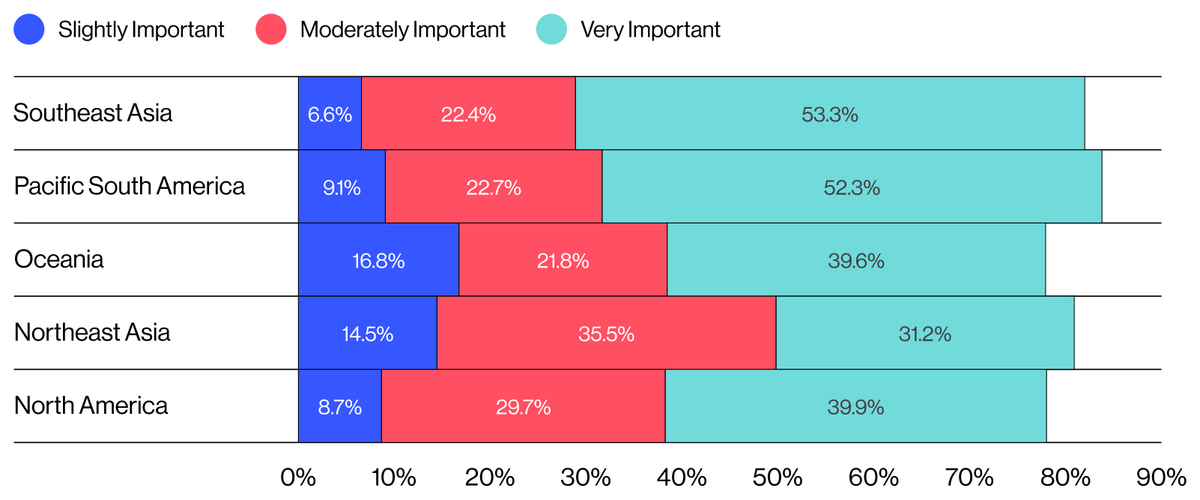
Our findings underscore the importance of workforce capability in AI uptake. About 79% of respondents identify digital skills as a moderately important or very important accelerator, while 70% of them cite insufficient digital skills or resistance to reskill as a moderately or very important hindrance. In all subregions, at least 78% of respondents exhibit some degree of worries about inadequate skills (Figure 1.17). The results echo the UNESCAP’s study highlighting shortages in AI-related skills as one of the most significant barriers to Asia-Pacific’s AI adoption.30
Figure 1.17: Importance of Insufficient Digital Skills or Resistance to Reskill in Hindering AI Adoption, by Subregion
Source: PECC State of the Region Survey 2026
Respondents also frequently cite affordability of supporting infrastructures and AI applications as a factor accelerating AI adoption in the coming year. Approximately 64% identify the affordability of ICT infrastructure and 66% the affordability of computing capacity as moderately important or very important factors affecting the uptake. In contrast, the high cost of ICT infrastructure and high cost of computing capacity are both cited by 61% as major constraints on adoption. Moreover, high cost of AI applications is cited as a moderately and very important element slowing the adoption by about 62% of respondents.
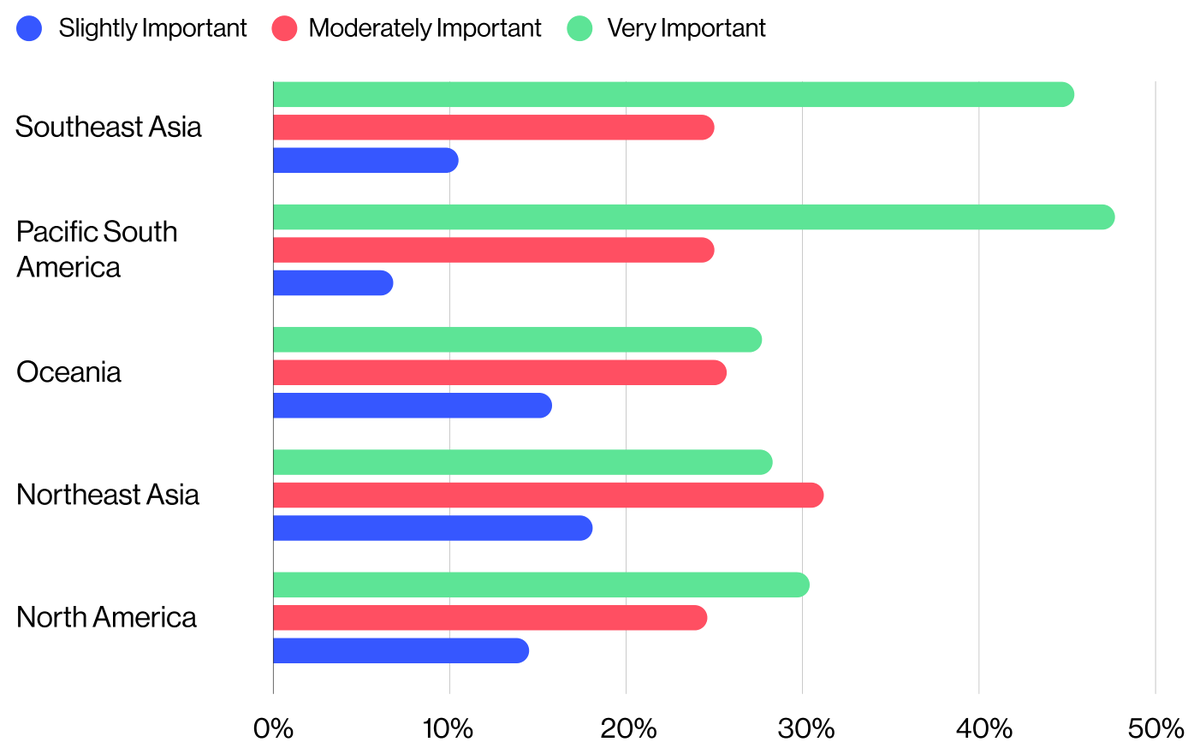
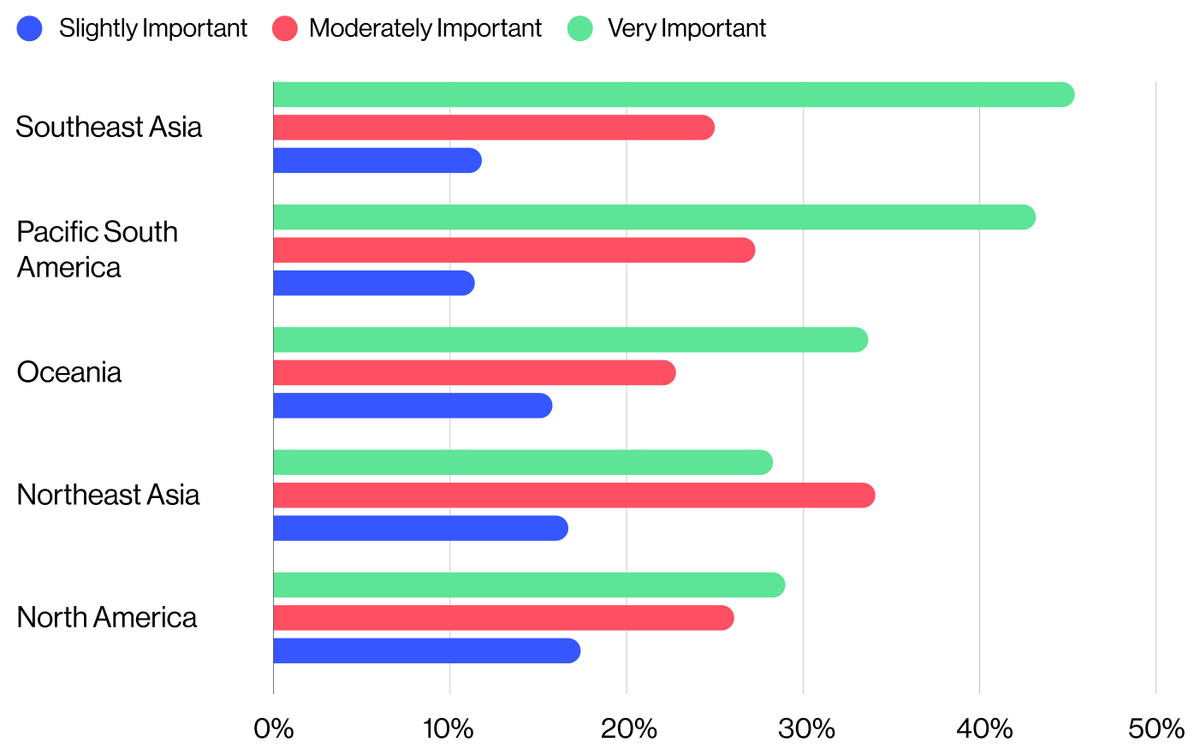
Variations across subregions are notable. Around 45% of respondents from Southeast Asia and 48% from Pacific South America believe that high cost of computing capacity is a very important factor discouraging the uptake. However, the comparable figures are much less for Northeast Asia (28%), Oceania (28%), and North America (30%) (Figure 1.18). In addition, high cost of AI applications as a very important impediment is cited by 45% of those surveyed in Southeast Asia and 43% in Pacific South America. Nonetheless, this view is shared by smaller proportions of surveyed individuals in North America (29%), Northeast Asia (28%), and Oceania (34%) (Figure 1.19).
Figure 1.18: Importance of High Cost of Computing Capacity in Hindering AI Adoption, by Subregion
Source: PECC State of the Region Survey 2026
Figure 1.19: Importance of High Cost of AI Applications in Hindering AI Adoption, by Subregion
Source: PECC State of the Region Survey 2026
PECC’s survey highlights the role of organizational dynamics in determining the uptake. Approximately 75% of respondents identify leadership support for AI as a moderately important or a very important accelerator. About 77% of them hold similar views towards organizational openness to innovation. This is reinforced by another survey result that lack of leadership support for AI and reluctance by management to innovate (e.g. unwillingness to experiment, low tolerance for risk) are respectively noted by more than half of respondents as a moderately important or very important hindrance (Annex A, Question 7).
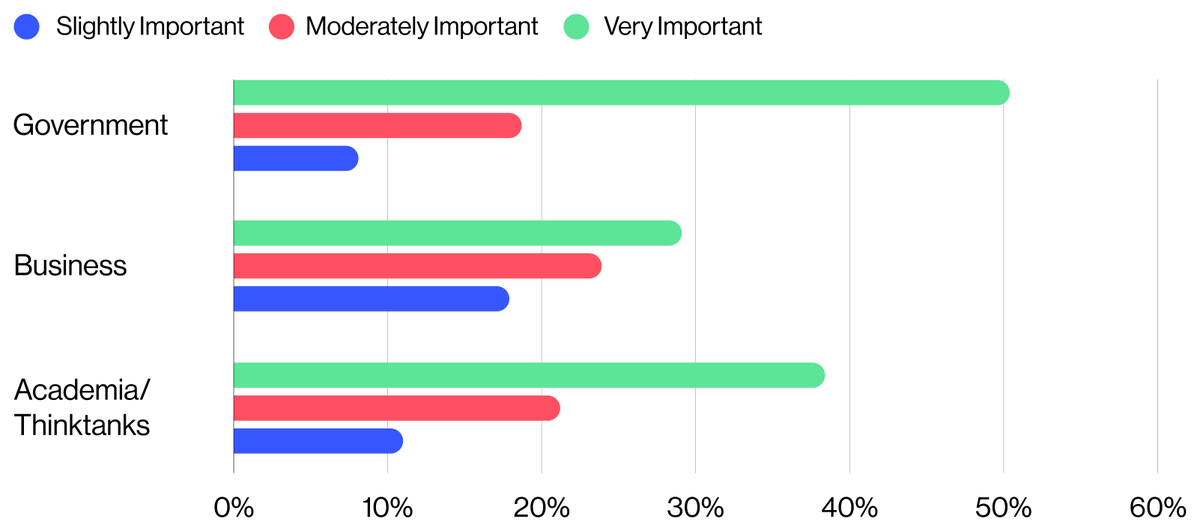
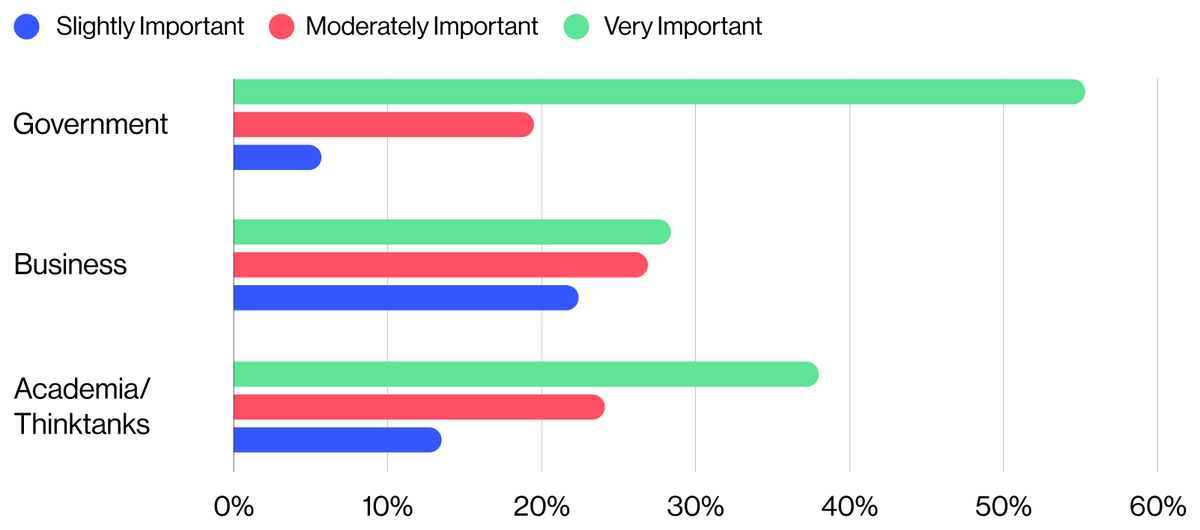
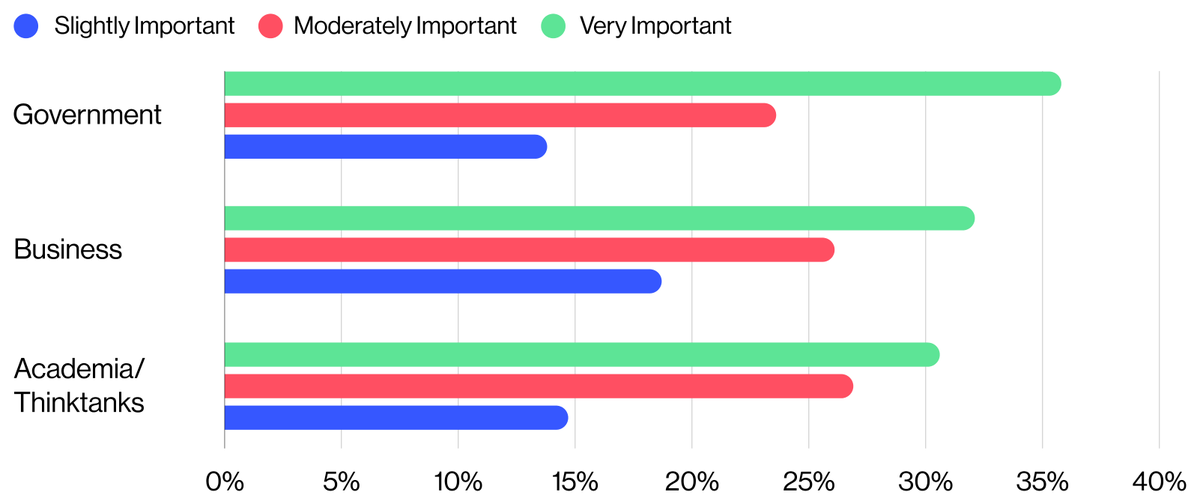
Governments’ interventions are perceived to have nuanced effects on next year’s AI adoption. Around 62% and 59% of respondents indicate AI strategy or plan, and government support (e.g. partnership, funding, reskilling) as moderately important and very important elements driving the adoption. At the same time, about 57% of them see existing AI and AI-related regulations (e.g. AI safety frameworks) as moderately important or very important constraints. Also, perceptions on the role of government support in affecting the uptake vary across affiliations. While more than half (50.4%) of government respondents cite it as a very important accelerator, only about 38% and 29% of their counterparts from academic/thinktanks and business do so (Figure 1.20).
Figure 1.20: Importance of Government Support in Driving AI Adoption, by Affiliation
Source: PECC State of the Region Survey 2026
Also, government’s AI strategy or plan is seen by 55% of the former as a very important booster, but 38% and 28% of respondents from academia/thinktanks and private sector share similar views (Figure 1.21). Furthermore, about 36% of government respondents identify existing AI and AI-related regulations as a very important hindrance. Yet, only about 31% and 32% of their equivalents from academic/thinktanks and business respectively do so (Figure 1.22).
Figure 1.21: Importance of AI Strategy or Plan in Driving AI Adoption, by Affiliation
Source: PECC State of the Region Survey 2026
Figure 1.22: Importance of Existing AI and AI-Related Regulations in Slowing AI Adoption, by Affiliation
Source: PECC State of the Region Survey 2026
Some technical factors are also seen as discouraging next year’s AI uptake. About 66% of our survey respondents identify difficulties with availability or quality of the necessary data for AI as a moderately important or very important hindrance. Additionally, a substantial proportion (71%) of them note the risks caused by technology as a moderately important or very important impediment (Annex A, Question 7).
Concerns about AI and AI-Related Risks
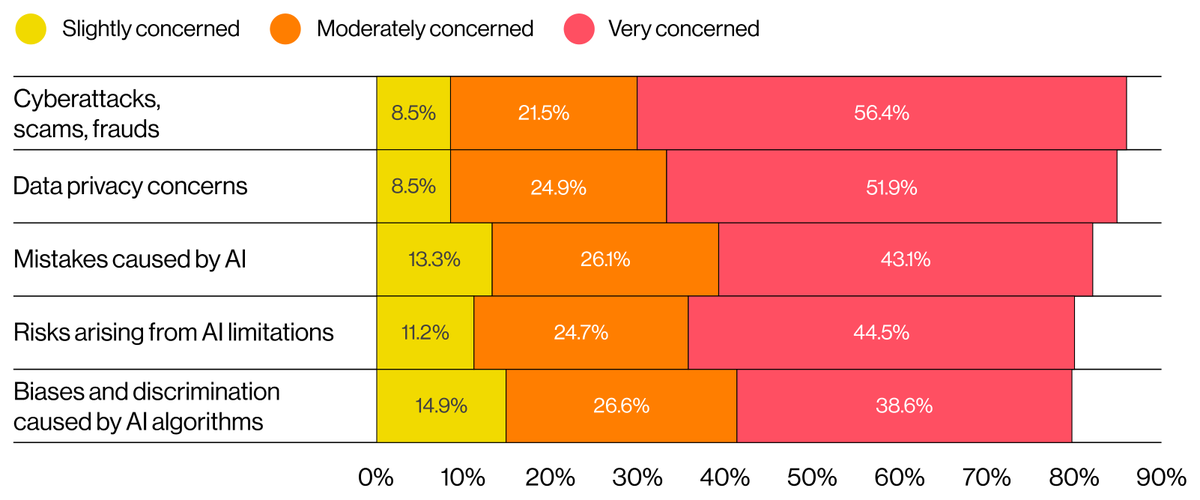
Members in the PECC’s opinion survey panel hold a wide range of concerns about AI and AI-related risks (Annex A, Question 8). The top 5 most frequently referenced risks, in descending order, are: cyberattacks, scams, frauds; data privacy concerns; mistakes caused by AI (e.g. hallucination); risks arising from AI limitations (e.g. over-reliance on AI systems, lack of human oversight); biases and discrimination caused by AI algorithms (Figure 1.23).
Figure 1.23: Top 5 Concerns about AI and AI-Related Risks
Source: PECC State of the Region Survey 2026
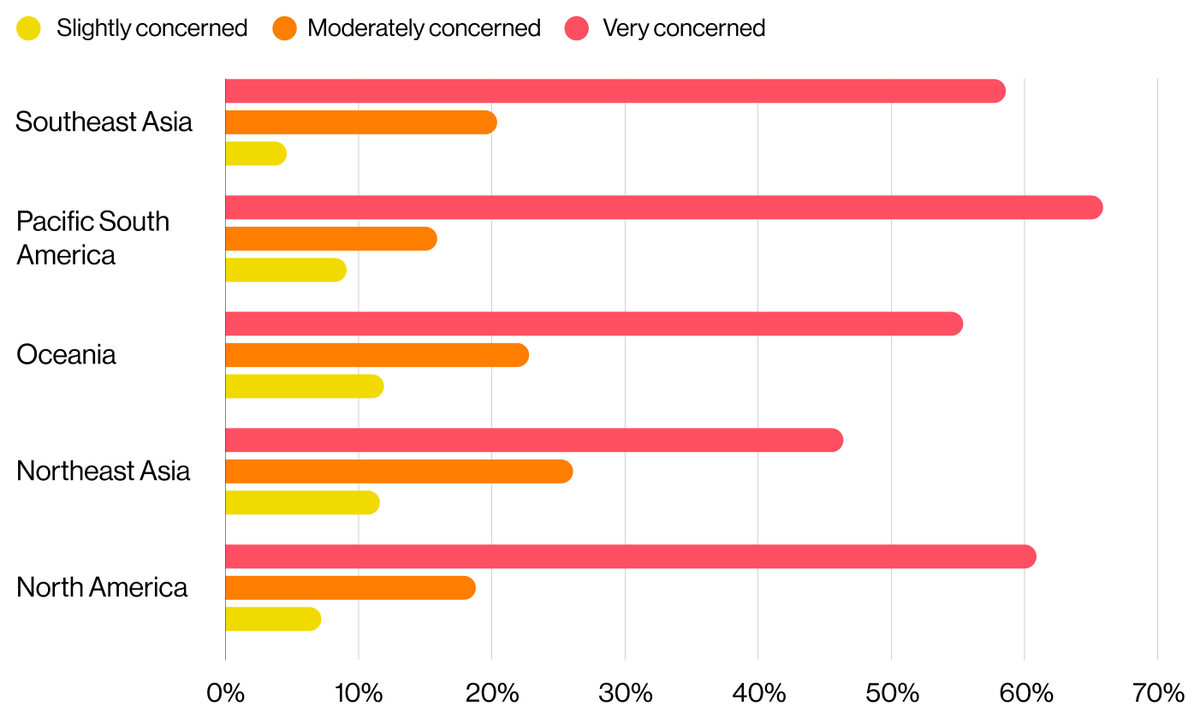
Concern over cyberattacks, scams and frauds feature prominently. Besides being identified as the primary risk overall (by 86% of respondents), this issue attracts the highest intensity of anxiety, with about 56% of them saying they are very concerned. These results align with the other analysis, which found that Asia-Pacific firms has been the target of more than one-third of the global online attack incidents in 2020-2024 as compared to the other regions.31 According to the UN Office on Drugs and Crime, yearly losses from scams across East Asia, Southeast Asia, Australia, and New Zealand amounted to US$ 88.3-114.1 billion in 2025, registering about three times the 2023 recorded losses.32 Such dramatic rise is partly driven by the use of AI and deepfake technologies in recent criminal operations.
A subregional breakdown reveals that larger shares of respondents in North America, Pacific South America, and Southeast Asia are very concerned about these issues as compared to the other subregions (Figure 1.24). Southeast Asia has become the epicenter of the AI-enabled organized crimes ranging from hacking incidents interrupting the operations of Indonesian public agencies, to attacks on Vietnamese brokerage firms and online scams in Thailand.33 Beyond Southeast Asia, the World Economic Forum’s Global Cybersecurity Outlook 2026 noted that 79% and 77% of people in North America and Pacific South America had experienced cyber-enabled fraud last year.34
Figure 1.24: Concerns about Cyberattacks, Scams, and Frauds, by Subregion
Source: PECC State of the Region Survey 2026
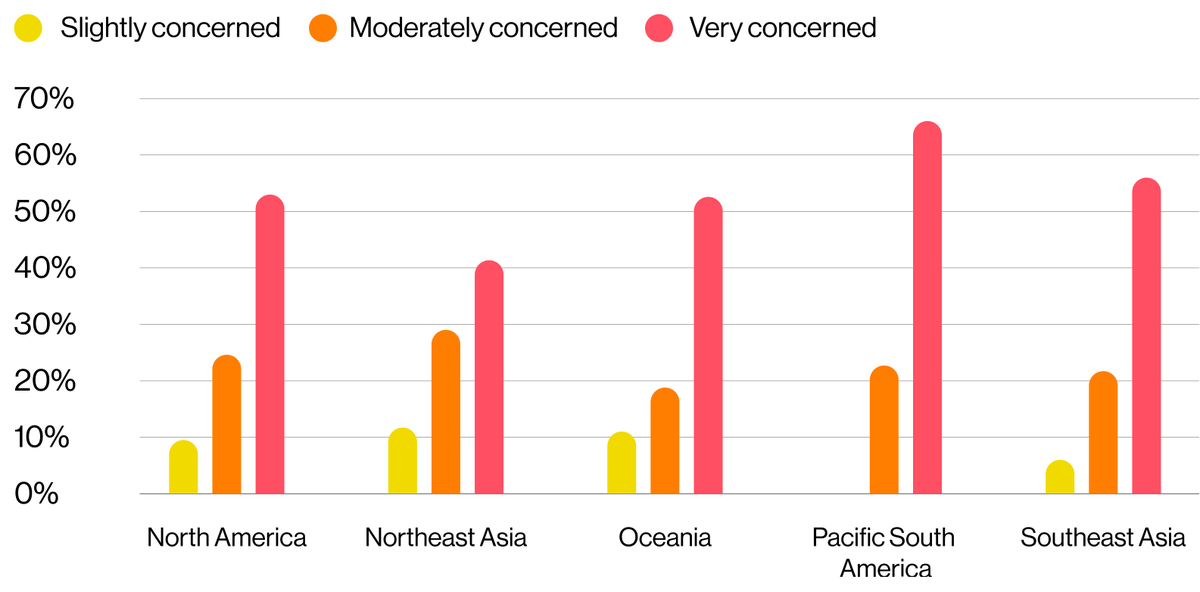
“Data privacy concerns” emerges as the second most cited risk associated with AI. Worries run high as more than half (52%) of respondents in our survey indicate “very concerned” (Figure 1.23). This widespread anxiety partly stems from a broader lack of confidence in data custodians. One analysis unveiled that only 15% of Asia-Pacific consumers trust brands to use their personal data responsibly.35 Subregion-wise, respondents in Pacific South America and Southeast Asia express unease towards this problem in greater percentages (66% and 56%) than those in the other subregions (Figure 1.25).
Figure 1.25: Concerns about Data Privacy, by Subregion
Source: PECC State of the Region Survey 2026
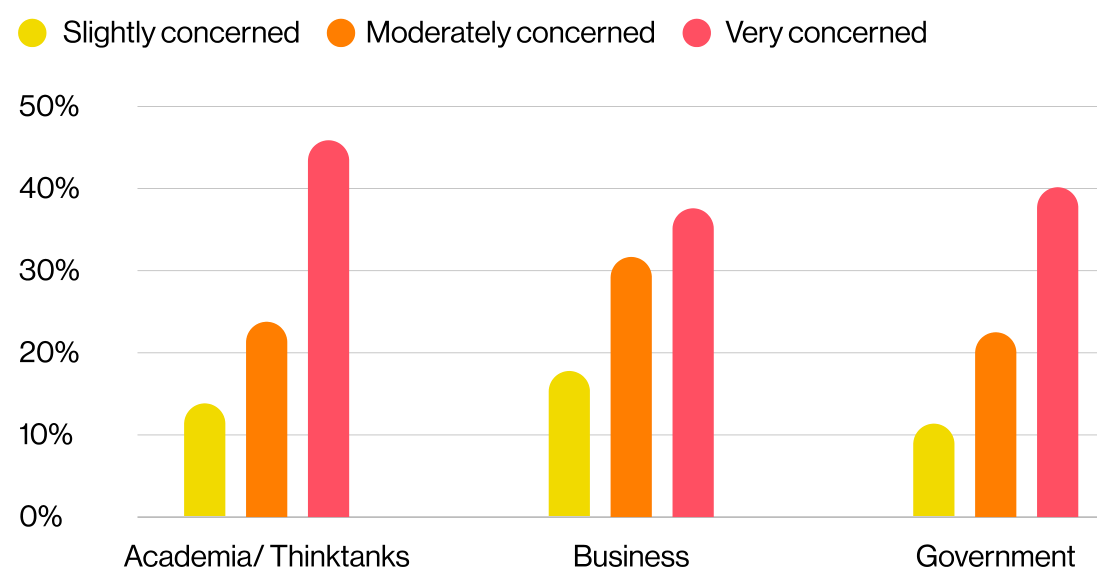
AI systems can produce errors and misleading outputs. These problems are reflected in PECC’s survey. Around 82% of respondents express some degree of unease about mistakes made by AI (e.g. hallucination), making it No. 3 risk (Figure 1.23). These worries are particularly manifested among academia and thinktank respondents. Some 47% of them are very concerned about the AI errors. Yet, only 40% of those in the public and 38% in private sector hold the same view (Figure 1.26).
Figure 1.26: Concerns about Mistakes Made by AI, by Affiliation
Source: PECC State of the Region Survey 2026
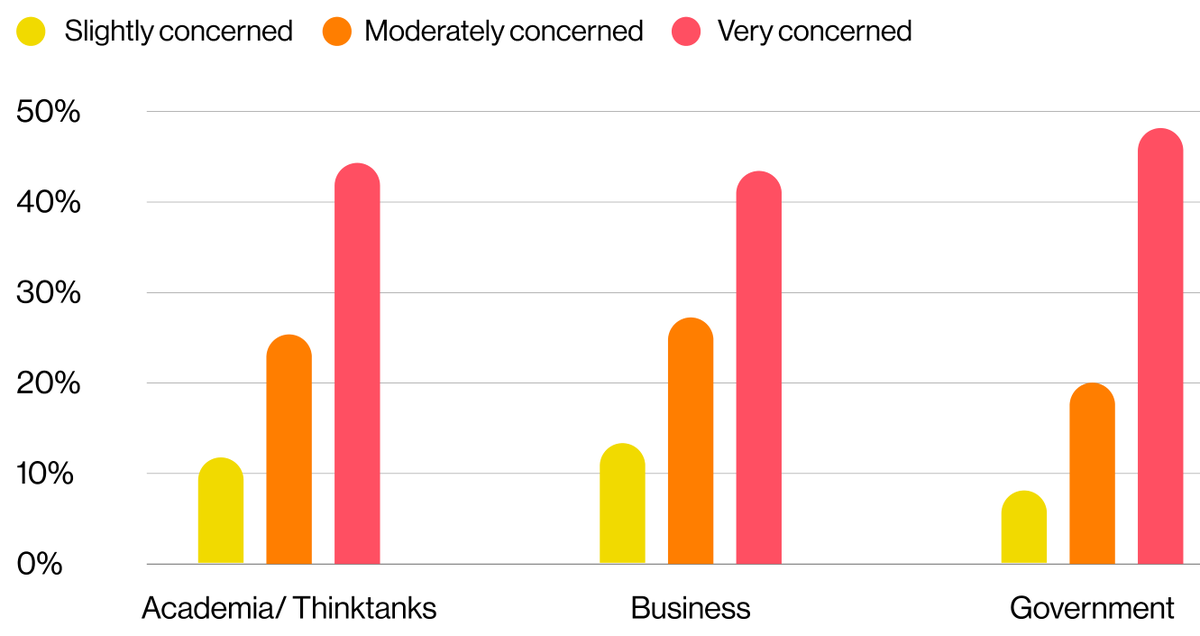
Regional stakeholders exhibit concerns about risks arising from AI limitations (e.g. over-reliance on AI systems, lack of human oversight), which rank fourth among AI-related risks (Figure 1.23). In other words, they fear excessive dependence on AI-generated outputs, especially in situations where users place unwarranted trust in automated recommendations or decisions. About 45% of those surveyed are very concerned, while 25% and 11% of them express moderate and slight levels of worries respectively. Government respondents exhibit a higher degree of concern than those from the other sectors (Figure 1.27).
Figure 1.27: Concerns about AI Limitations, by Affiliation
Source: PECC State of the Region Survey 2026
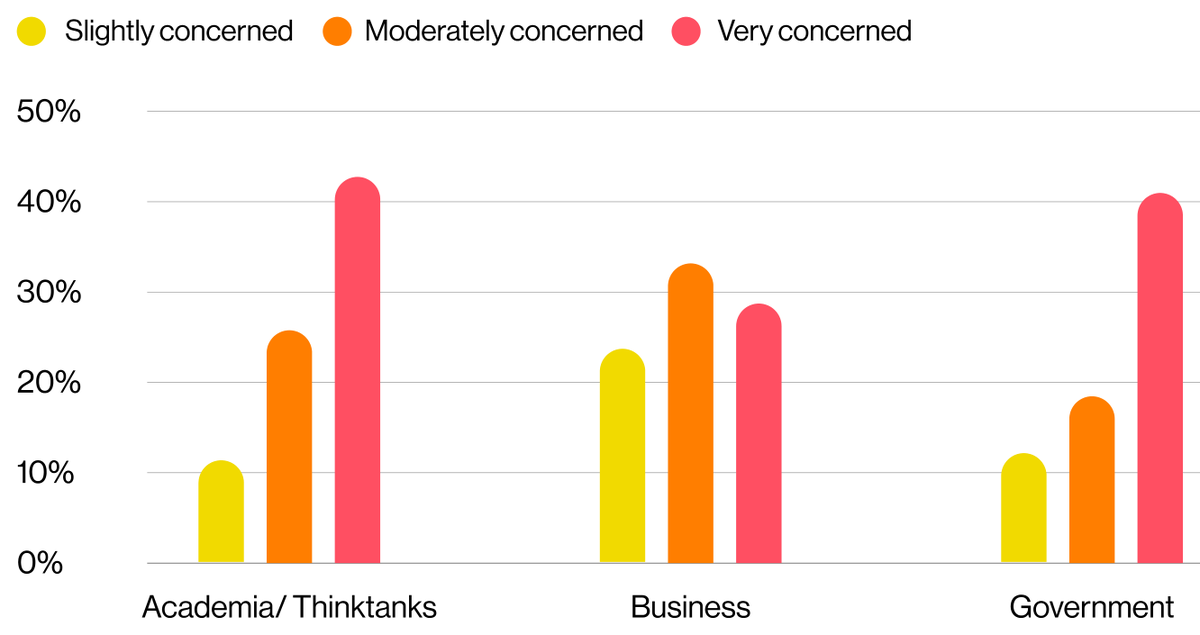
Additionally, 80% of respondents select “biases and discrimination caused by AI algorithms”, making it No. 5 risk (Figure 1.23). Non-business stakeholders are more worried about these issues than their business counterparts. About 43% of those from academia/thinktank and 42% from government respectively report “very concerned.” However, only 29% of those from businesses do so (Figure 1.28).
Figure 1.28: Concerns about Biases and Discrimination Caused by AI, by Affiliation
Source: PECC State of the Region Survey 2026
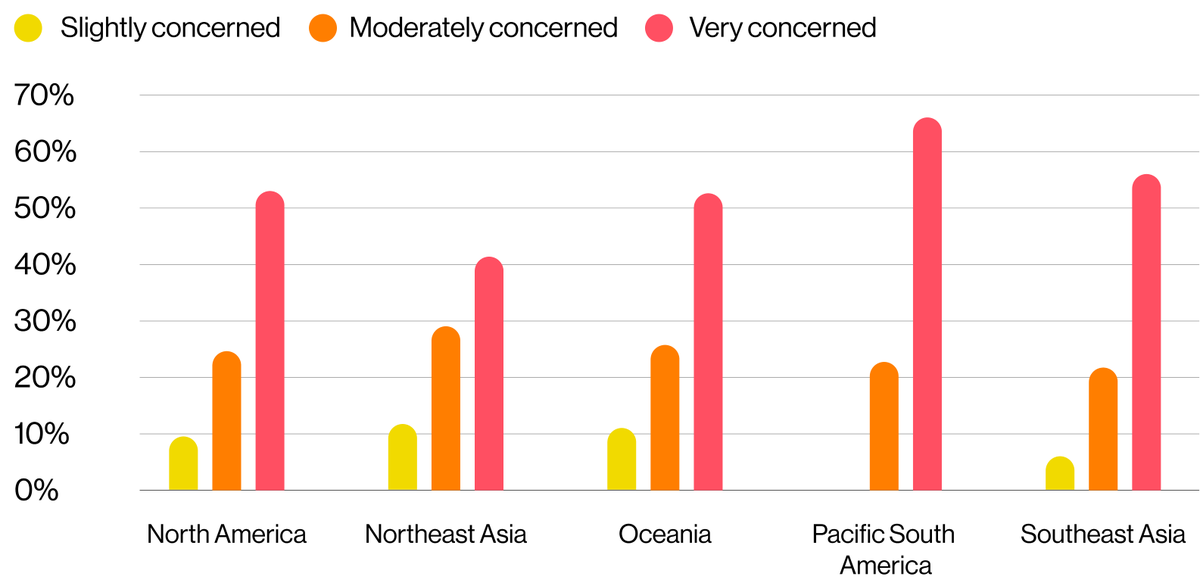
Despite not being among top 5 risks linked to AI, sentiments about job displacement are worth highlighting. At least seven in ten members in the PECC’s survey mention it (Annex A, Question 8). More than half of respondents in each subregion indicate some degree of this anxiety (Figure 1.29). This is consistent with observed trends: East Asia and Pacific economies are witnessing AI-related layoffs. According to the IMF, employees in Asia undertaking service, sales, and clerical roles possess a higher likelihood of displacement.36 Regarding services sector, the technologies are increasingly displacing routine cognitive tasks (e.g. risk assessment, customer service) and non-routine cognitive ones (e.g. interpretation, teaching).37
Figure 1.29: Concerns about Job Displacement, by Subregion
Source: PECC State of the Region Survey 2026
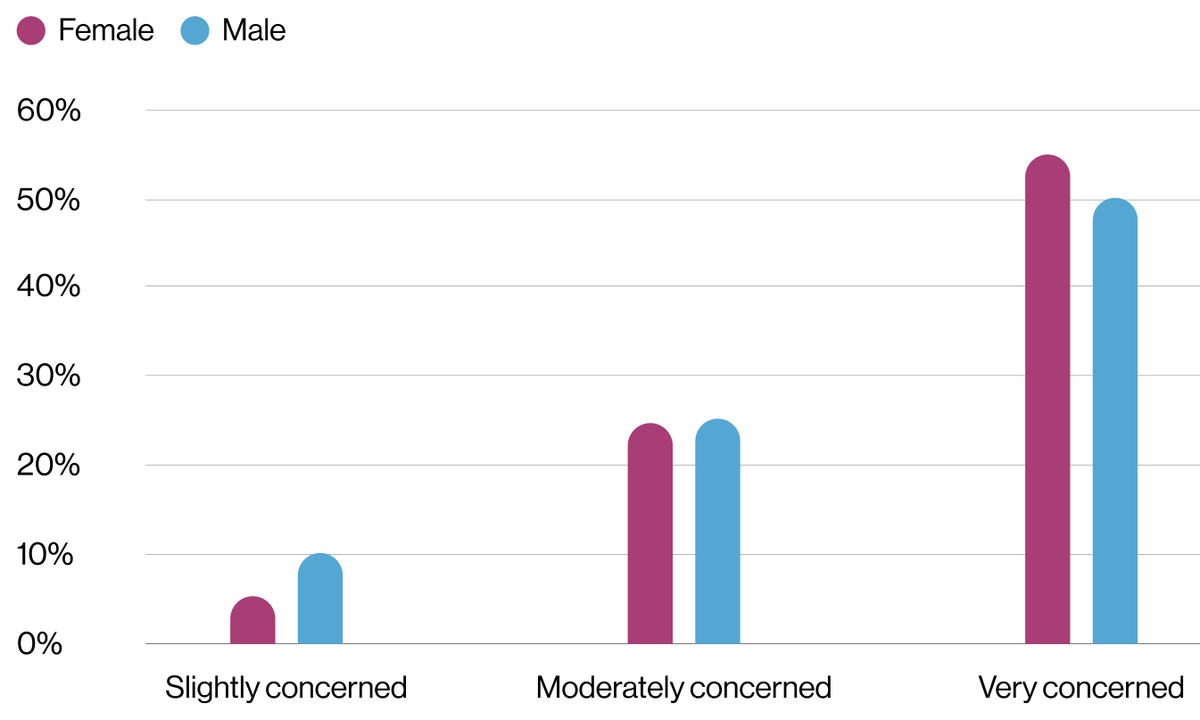
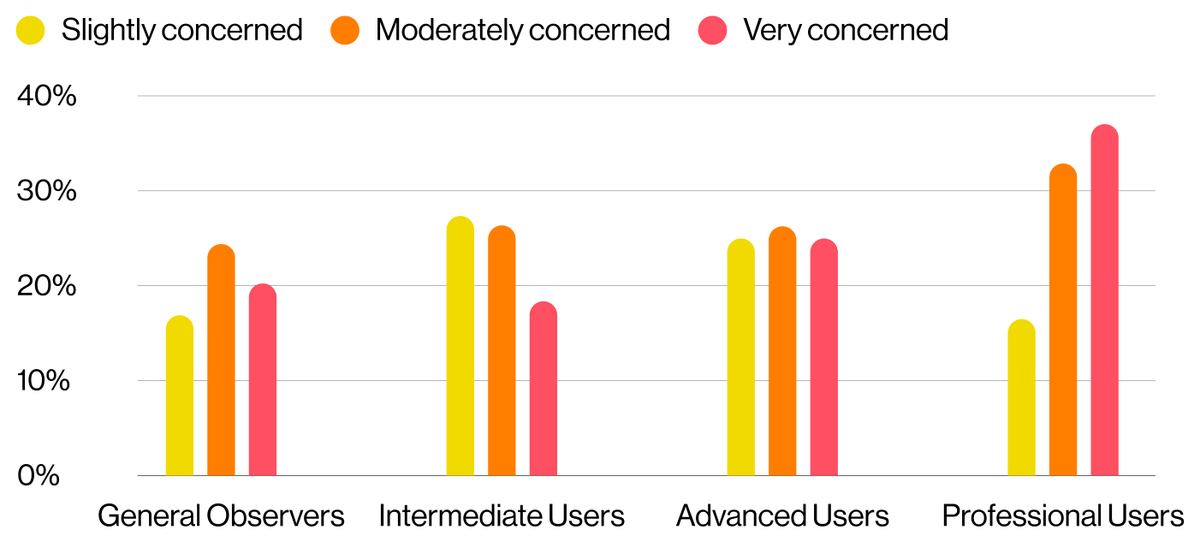
Moreover, female respondents are very concerned over job displacement in a larger share (55%) than their male counterparts (50%) (Figure 1.30). This echoes the World Bank’s study that women in East and Asia Pacific economies are more exposed than men to the AI displacement effect.38 In addition, respondents with higher levels of proficiency in digital and AI literacy show greater degree of anxiety. For instance, more than one third (37%) of professional users say they are “very concerned” about job displacement by AI, while only 25% of advanced users and 19% of intermediate users share this concern (Figure 1.31).
Figure 1.30: Concerns about Job Displacement, by Gender
Source: PECC State of the Region Survey 2026
Figure 1.31: Concerns about Job Displacement, by Level of Proficiency in Digital and AI Literacy
Source: PECC State of the Region Survey 2026
It should be emphasized that our survey results do not suggest that AI adoption always produces negative consequences. Rather, technology advancements are linked with both job creation and displacement, depending on the nature of tasks being performed and employees’ skills. For instance, robot adoption in Southeast Asia in 2018-2022 created approximately 2 million jobs for skilled formal workers while replacing around 1.4 million low-skilled ones from routine and manual occupations.39 In Vietnam, each additional robot per thousand workers correlates with employment gains of 6-9% and wage gains of 2-4% at the district level.40
Economy’s Preparedness and Policies for AI Adoption
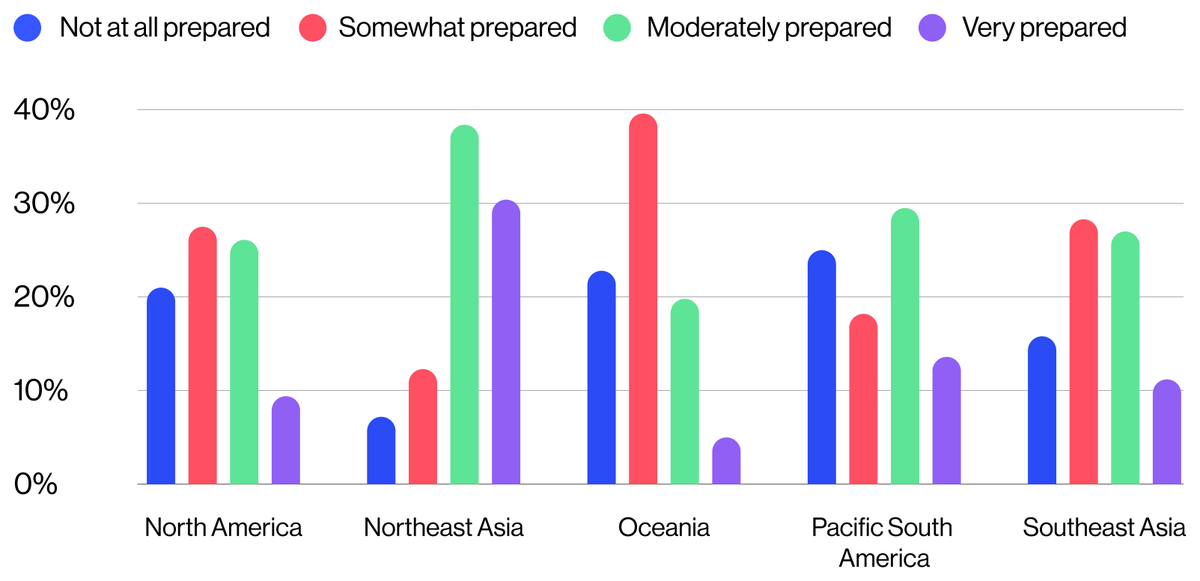
In terms of their economy’s preparedness for AI uptake, PECC survey participants view certain foundations for AI adoption as more advanced than others (Annex A, Question 9). Overall, they identify physical infrastructure as an area where their economies are most prepared. Illustratively, more than half (50.7%) of respondents report that their economies are moderately or very prepared in terms of digital infrastructure, while 43% express similar opinions regarding power grid scalability.
Preparedness levels diverge across subregions. For example, respondents from Northeast Asia rate their economies’ power grid scalability as very or moderately prepared in larger proportions than those from the other subregions (Figure 1.32).
Figure 1.32: Levels of Preparedness - Power Grid Scalability, by Subregion
Source: PECC State of the Region Survey 2026
Such disparities result in the digital and AI divide. The IMF’s AI Preparedness Index shows substantial differences across Asia-Pacific economies in terms of digital infrastructure, computing capacity, digital connectivity, and data infrastructure. These elements contribute to uneven access to cloud-based and related services as well as integration of AI into business processes.41 With regard to the region’s digital infrastructure, the 2026 PECC report on “Enabling AI for Trade Facilitation in the APEC Region” posited that although “internet access continues to improve, regional broadband connectivity remains uneven, and many economies continue to rely primarily on mobile networks that do not provide the performance required for advanced AI applications.”42 At the 33rd PECC General Meeting, experts observed that effective governance, capacity building, digital infrastructure, skills development, and regional cooperation can help ensure the benefits from AI transformation are broadly shared.43
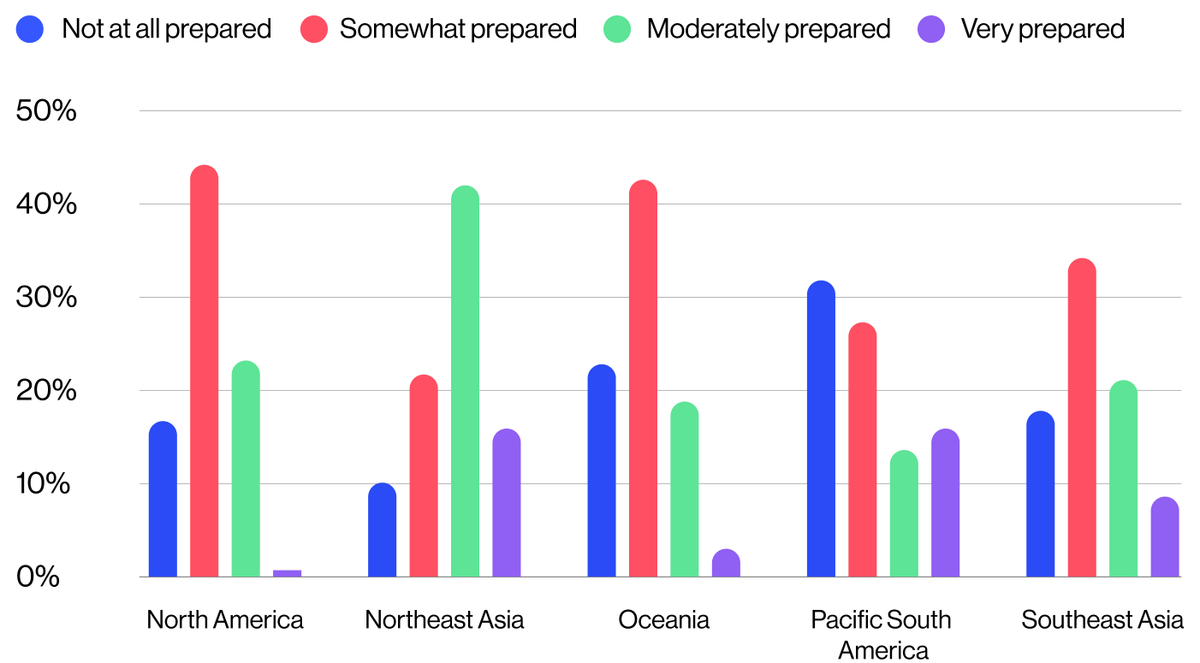
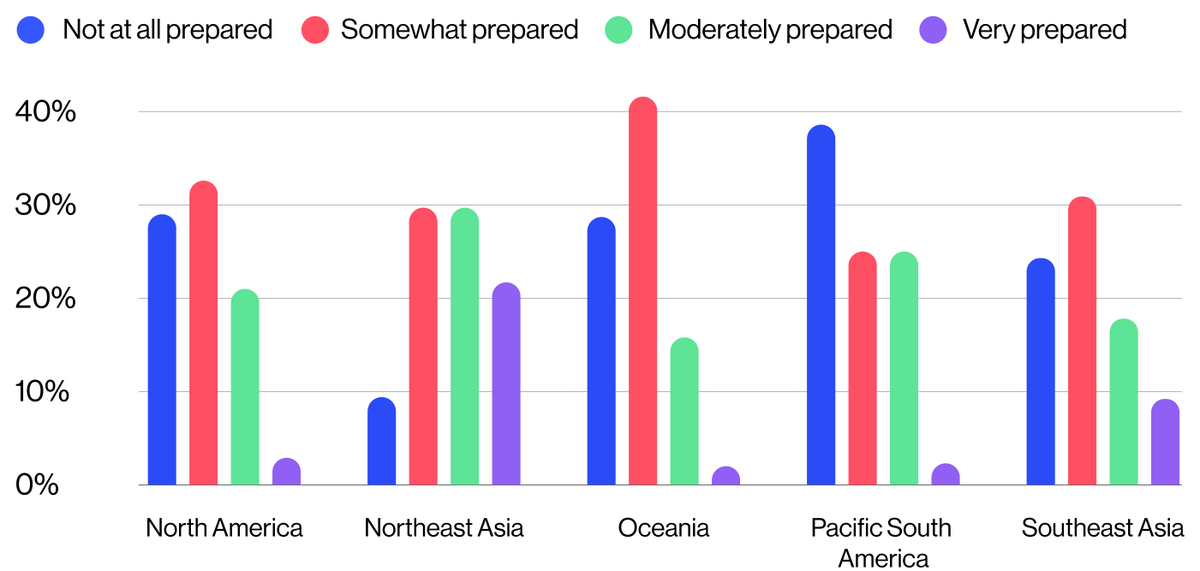
Regional stakeholders also express less enthusiastic perceptions regarding their economies’ preparedness in the realms of cybersecurity protection and AI safety and ethical frameworks (Annex A, Question 9). For cybersecurity protection, approximately 35% of respondents rate their economies as somewhat prepared, while 18% rate them as not at all prepared. About one-third of them remark that their economies are somewhat prepared in terms of AI safety and ethical issues, and 24% of them regard their economies as not at all prepared. Subregional differences exist, with a larger proportion of respondents from Northeast Asia believing their economies are either very or moderately prepared vis-à-vis those from the other subregions (Figure 1.33 and Figure 1.34).
Figure 1.33: Levels of Preparedness - Cybersecurity Protection, by Subregion
Source: PECC State of the Region Survey 2026
Figure 1.34: Levels of Preparedness - AI Safety and Ethical Frameworks, by Subregion
Source: PECC State of the Region Survey 2026
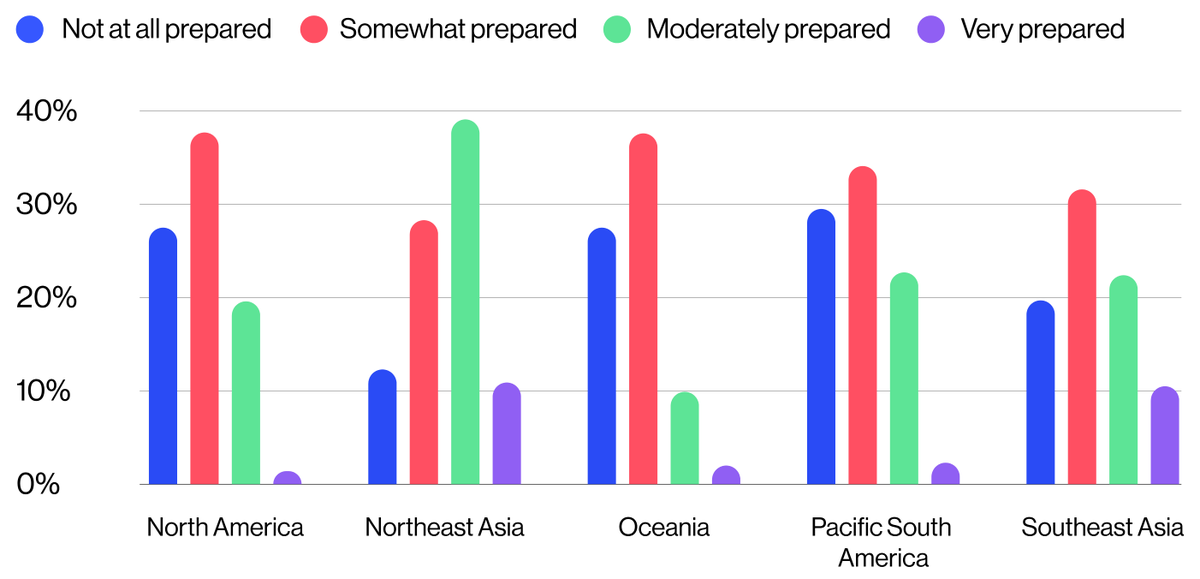
Workforce reskilling and transition is another area where members in our PECC survey panel point out that their economies are less ready. In this area, around 57% of them consider their economies somewhat prepared or not at all prepared (Annex A, Question 9). This worry is well-documented in other studies indicating that although AI adoption has accelerated among students, workers, and organizations, workforce development systems and educational institutions have often struggled to keep pace.44 The cross-subregional comparison reveals that Northeast Asian respondents are more likely to see their economies as moderately or very prepared (Figure 1.35).
Figure 1.35: Levels of Preparedness - Workforce Reskilling and Transition, by Subregion
Source: PECC State of the Region Survey 2026
Additionally, the PECC’s opinion survey probes into the role of government policies in influencing economies’ ability to adopt AI. Respondents regard some measures as more useful than the others (Annex A, Question 10). Illustratively, about 47% of them believe that interoperability of data standards increases AI adoption, while 48% and 43% of them respectively identify cybersecurity laws in their economy and robustness of their economy’s intellectual property protection as positive contributors. Moreover, about 36% of regional stakeholders report their economy’s data localization requirements as well as mandatory AI safety audits and risk-based regulations as working in favor of AI adoption. These results help confirm that policy design affects AI uptake. For instance, tax incentives and robust intellectual property protections stimulate capital investment and speed up patent filing among tech startups. Transparent governance structures and ethical standards lower regulatory risk, building the institutional trust required for AI deployment at scale in both the public and private sectors.45
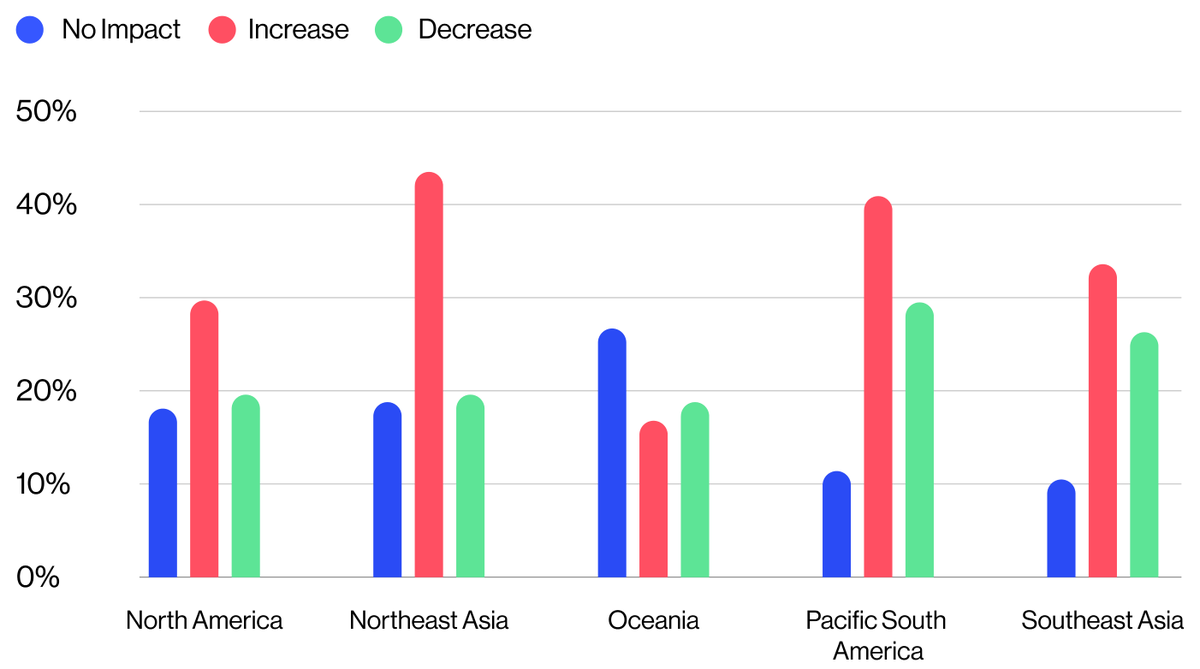
Interestingly, the effects of advanced economies’ export controls on microchips, software, and related products on economies’ ability to adopt AI cut both ways. About 22% of respondents believe these export restrictions reduce the capability. However, a larger share (33%) remark that they increase it. Differences in opinions are evident across subregions, with a larger percentage of respondents from Northeast Asia believing that export restrictions raise economies’ capability to embrace AI than those from the other subregions (Figure 1.36).
Figure 1.36: Effects of Advanced Economies’ Export Controls on AI Adoption, by Subregion
Source: PECC State of the Region Survey 2026
Ways Forward for AI Cooperation under APEC
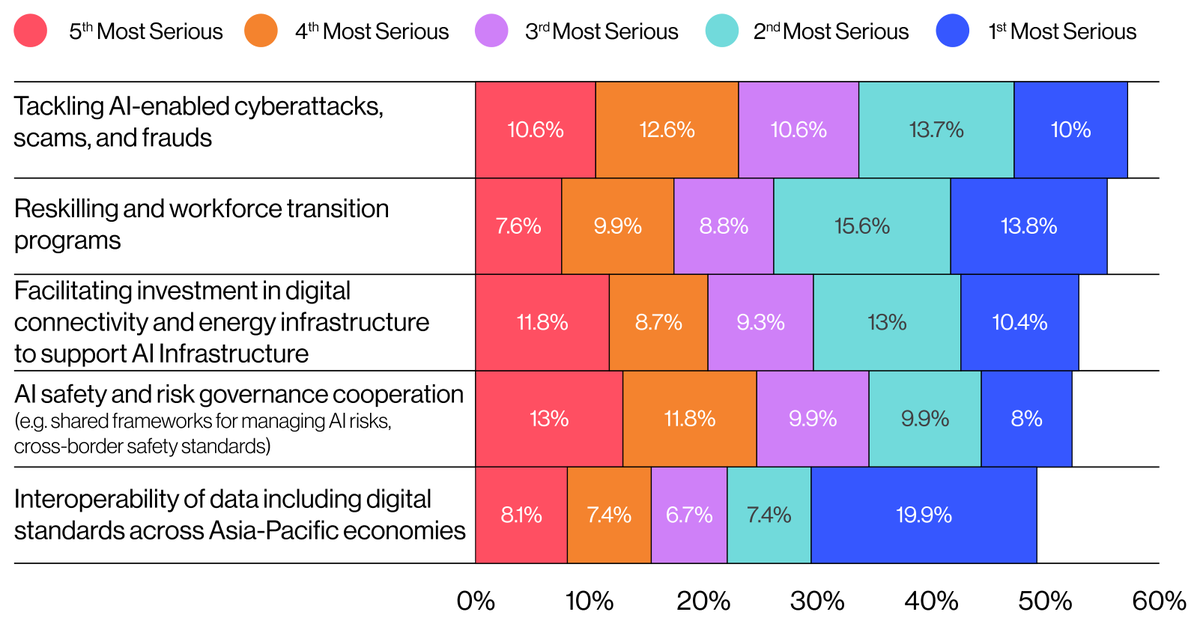
PECC’s opinion survey asks the region’s stakeholders to identify the aspects of AI cooperation that they believe should be further advanced under APEC (Annex A, Question 11). In descending order, top 5 areas are: tackling AI-enabled cyberattacks, scams, and frauds; reskilling and workforce transition programs; facilitating investment in digital connectivity and energy infrastructure to support AI Infrastructure; AI safety and risk governance cooperation (e.g. shared frameworks for managing AI risks, cross-border safety standards); and interoperability of data including digital standards across Asia-Pacific economies (Figure 1.37).
Overall, “tackling AI-enabled cyberattacks, scams, and frauds” is ranked as the most important element for AI cooperation under APEC, selected by 57% of surveyed individuals. This result aligns with the pattern indicated above that “cyberattacks, scams, frauds” emerges as No. 1 risks associated with the technology. PECC has helped inform policy discussion for APEC cooperation in this area through its research and multi-stakeholder dialogues.46 For instance, the PECC report on “Primer on Economic Integration Issues Posed by the Digital Economy” recognized AI as a central driver of economic growth and digital trade in the Asia-Pacific, and identified “ensuring that AI policies are beneficial in advancing that growth with APEC” as a key component of regional economic cooperation and development. It noted that governments play an important role in developing an ecosystem balancing innovation with safety and integrity, and doing so requires implementing supportive policies including those related to privacy and cybersecurity.47
Figure 1.37: Top 5 Aspects of AI Cooperation under APEC
Source: PECC State of the Region Survey 2026
“Reskilling and workforce transition programs” is chosen by 56% of respondents as a priority area for AI collaboration under APEC (Figure 1.37). PECC’s research confirms the importance of human capital and access to AI-related opportunities to prepare the region for inclusive and meaningful AI transformation. One of our studies found that effective AI governance is often accompanied by large-scale capacity-building initiatives to ensure that the benefits are equitably distributed across societies and economies. Governments should target these initiatives at underserved communities and MSMEs to shrink the AI divide.48
“Facilitating investment in digital connectivity and energy infrastructure to support AI infrastructure” is among the most frequently cited priorities for APEC’s AI cooperation, with about 53% of respondents selecting it (Figure 1.37). PECC discussions offered policy ideas for helping propel cooperation on AI infrastructure. For example, at the Seminar on “Responsible Adoption of General-Purpose AI”, participants suggested that economies with strong AI sectors help bridge capacity gaps between advanced and less advanced economies by investing in digital infrastructure and supporting wider access to technologies and capabilities.49
Moreover, regional stakeholders want APEC cooperation to focus on addressing risks and adverse consequences linked with AI (Figure 1.37). Just over half (52%) of members in our survey panels see “AI safety and risk governance cooperation” as a priority aspect of APEC collaboration. PECC’s work has formulated policy recommendations dealing with safety and risk issues. For instance, at the Conference on “Asia-Pacific Artificial Intelligence (AI) Governance Accelerator and Preparing for AI Transformation” in 2025, panelists recommended collaboration in AI safety research, transparency in AI development, and testing and assessment frameworks to ensure safety, trustworthiness, and accountability of AI systems. They also called for greater AI oversight, safety evaluations, and bias-mitigation measures.50
About half of surveyed respondents identify interoperability of data including digital standards across Asia-Pacific economies as a priority element of APEC’s AI cooperation. One-fifth of them view it as the most important priority (Figure 1.37). This confirms that interoperability of data and standards is an essential component to realize the benefits of AI across the region. As noted in the PECC Report on “Enabling AI for Trade Facilitation in the APEC Region”, one practical approach to realize such interoperability is to “advance standard definitions for core trade entities in line with existing international norms.”51 Moreover, cooperation regarding standards needs multi-stakeholder engagement. The case study (Box 1.1) illustrates how collaboration among a technology provider, financial institutions and an international standards body tests out a standards-based application of AI to reduce manual paperwork in trade finance.
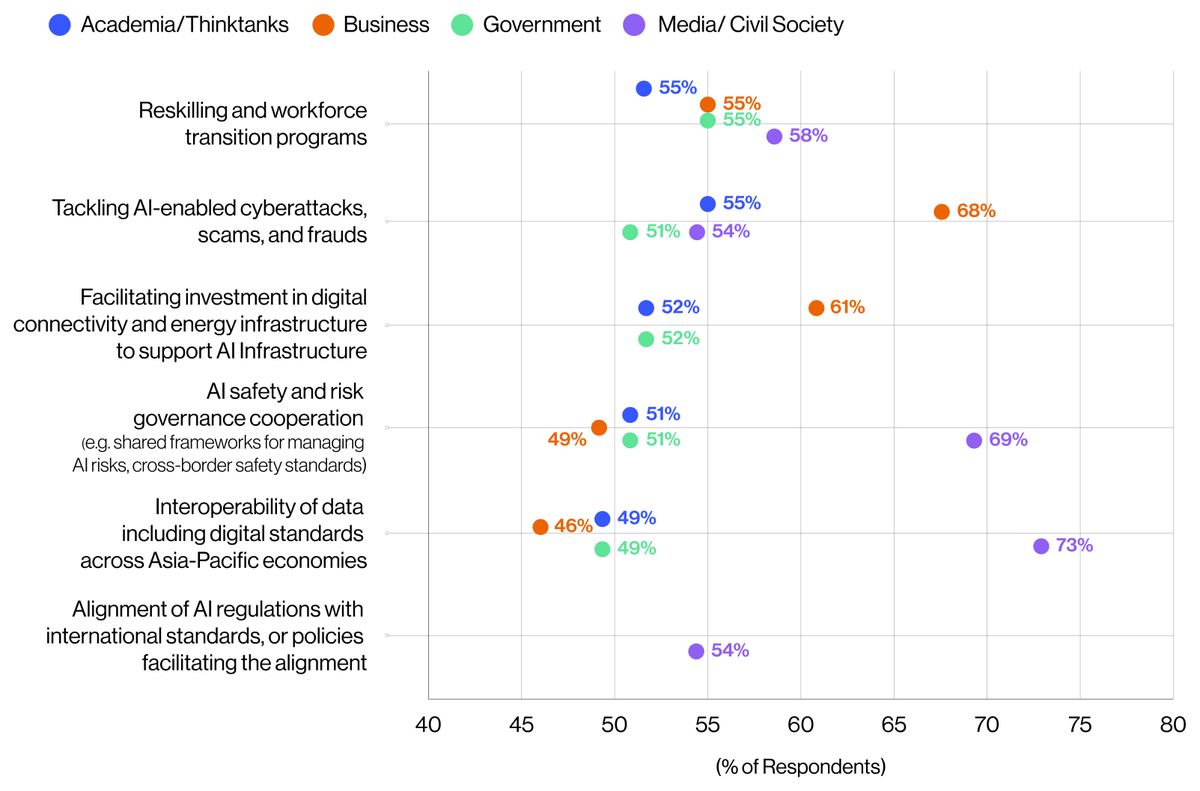
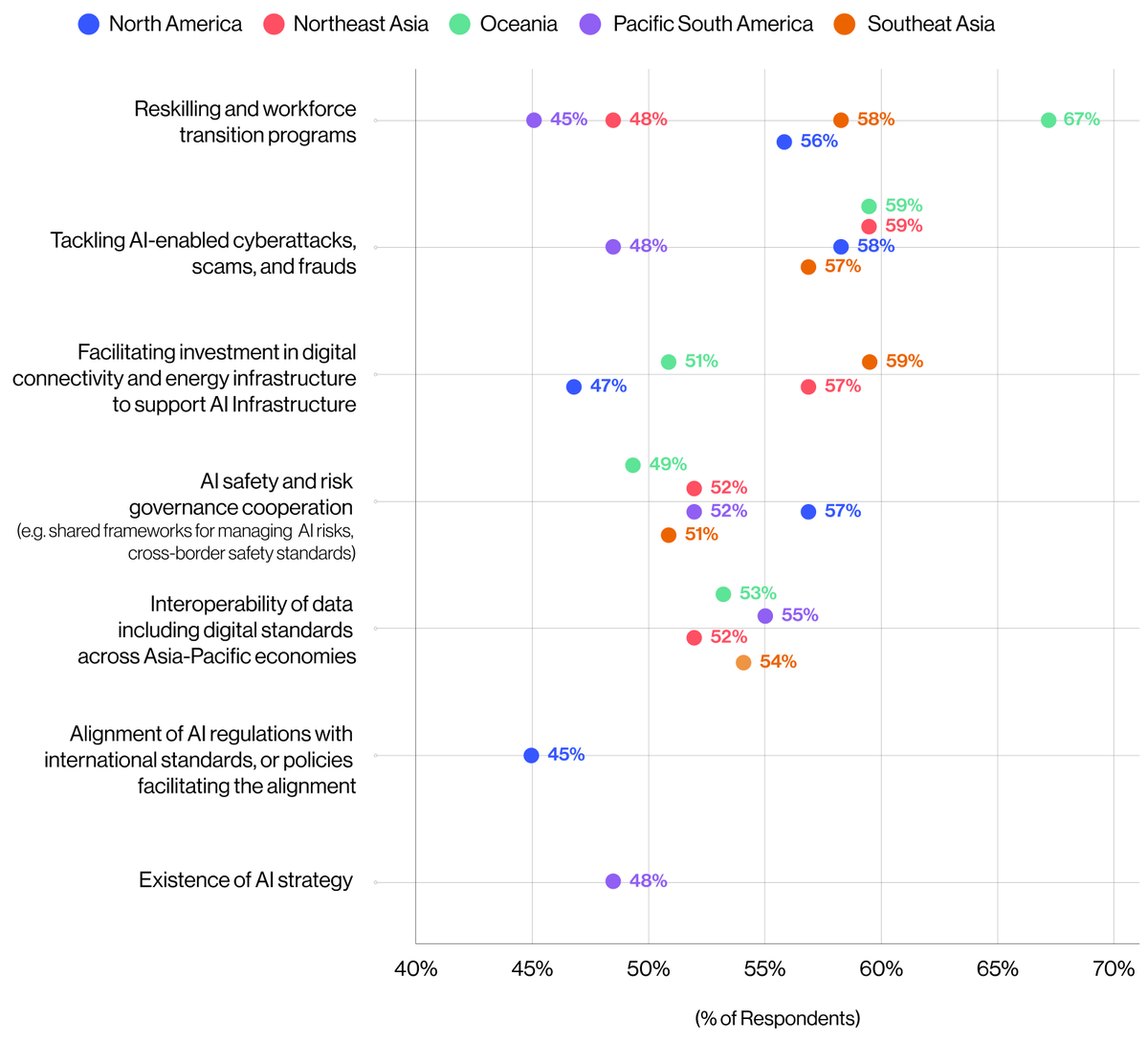
Opinions on APEC priorities for AI cooperation diverge across affiliations and subregions (Figure 1.38 and Figure 1.39). Business respondents place relatively strong emphasis on “tackling AI-enabled cyberattacks, scams, and frauds”, with 68% of them selecting it as No. 1 priority, compared with 55% or less among those from the other affiliations (Figure 1.38). Also, noticeably larger percentages of media and civil society participants prioritize “facilitating investment in digital connectivity and energy infrastructure to support AI Infrastructure” and “interoperability of data including digital standards across Asia-Pacific economies” than do their counterparts from the other sectors (Figure 1.38). Subregion-wise, surveyed individuals from Oceania stand out for their strong focus on “reskilling and workforce transition programs”, with 67% ranking it as the foremost priority, compared with 58% or less among those from the other subregions (Figure 1.39). These differences suggest that APEC could further enhance the effectiveness of its AI cooperation efforts by incorporating targeted programs addressing the diverse priorities across these groups.
Figure 1.38: Top 5 Aspects of AI Cooperation That Should be Advanced at APEC, by Affiliation
Source: PECC State of the Region Survey 2026
Figure 1.39: Top 5 Aspects of AI Cooperation That Should be Advanced at APEC,
by Subregion
Source: PECC State of the Region Survey 2026
As AI adoption continues to expand across the Asia-Pacific, the survey data suggest that many stakeholders view cooperation as an important means of sharing knowledge, strengthening capabilities, and addressing common opportunities and challenges associated with AI development and deployment. AI adoption and related issues will be examined in greater detail in Chapter 2.
In conclusion, PECC’s opinion survey reveals that AI is being widely adopted across the Asia-Pacific. The technology is contributing to increased productivity, efficiency and innovation, yet concerns remain regarding cybersecurity, workforce transitions, and policy environment supporting its deployment. The findings also point to notable differences in digital infrastructure, workforce skills, cybersecurity readiness, governance frameworks, and access to supporting resources, all of which affect economies’ preparedness to adopt and benefit from AI. These results suggest that the future impact of AI on the region will depend not only on technological advancements but also the economic, institutional, and policy conditions enabling the adoption. Building on these findings, Chapter 2 examines in greater detail the factors that drive and hinder AI adoption across the Asia-Pacific, and AI’s sectoral impacts. It also considers how policymakers can foster cross-border cooperation to further promote inclusive AI-driven growth and shared prosperity.
Box 1.1: Reimagining Trade Finance with AI
Microsoft × ANZ × HSBC × Lloyds
Trade depends on many documents that must all tell the same story. One study finds that a single cross-border shipment may involve up to 50 documents and as many as 30 stakeholders.52 The central pain point in trade finance (a process in which banks and companies use to support buying and selling) is the absence of information that is consistently structured, understood and transferable across institutions. When the same information is stored in different formats and repeatedly entered into corporate and bank systems, discrepancies are often detected too late, exceptional handling becomes slow, and financing decisions are delayed. This case study shows how AI is being tested as a tool that can read those documents, compare the details and highlight mismatches before involved players checking them manually. AI tools act as a document-checking assistant, with people still reviewing the result before any banking action is taken.
Microsoft worked with ANZ, HSBC and Lloyds on a technology proof of concept (PoC) – a pilot test rather than a live production system. The prototype demonstrated how large-language-model-powered AI agents could be embedded in a company’s system to extract information from trade records, compare it with related invoice and shipping data, identify discrepancies and transmit verified, structured information to bank platforms through secure API connections.
Figure A summarizes the collaboration: Microsoft (as the technology provider) supplies the technology and integration layer, including AI-agent capabilities, document understanding, ERP connectivity and the governance environment required to develop and supervise enterprise AI applications.
The three banks (as the trade finance contributors) contribute the trade-finance and client-workflow expertise needed to make the prototype relevant to real banking processes. HSBC emphasizes common data standards and consistent bank-defined data sets that exporters of different sizes could exchange electronically. ANZ focuses on embedding trade finance within clients' existing corporate workflows rather than treating the bank solely as a back-end transaction processor. Lloyds highlights the transition from transferring paper between parties to exchanging aligned, structured data that can integrate with client and logistics platforms. Public information does not disclose a rigid contractual allocation of tasks among the banks, so these contributions are best understood as complementary domain, regional and customer perspectives within a shared PoC.
The International Chamber of Commerce (ICC) provides the standards and convening layer.53 ICC’s Key Trade Documents and Data Elements (KTDDE) framework gives the participants above a common vocabulary for the core data contained in major trade documents, allowing information to be mapped and exchanged more consistently across ERP systems, bank platforms and supply-chain applications.
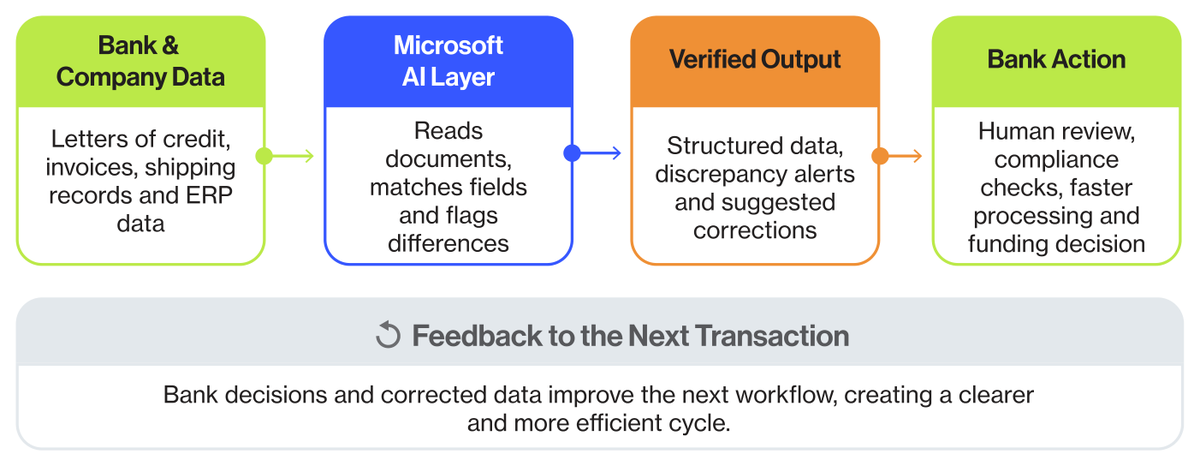
Figure B summarizes how trade documents and ERP data move through the Microsoft AI layer, become structured outputs for human review and bank action, and feed corrected information into later transactions:
The PoC simulates a corporate seller receiving a letter of credit (a bank message containing terms under which payment can be made in trade transactions). An AI agent parses the document, identifies key fields such as the buyer, seller, amount, shipment terms and dates, and compares them with invoice and shipping information in the ERP system. It also detects discrepancies, proposes corrections in natural language and, after human verification, transmits the structured data securely to the bank. Treasury users ask questions about the documents through a conversational interface, reducing the need to manually review multiple records and portal screens.
These potential benefits of this approach are not limited to ANZ, HSBC and Lloyds. Although these three banks helped develop and test the prototype, Microsoft designed it so that it can be used by other entities. In the future, the benefits could extend beyond banks and trading companies to fintech firms and governments. It could support customs filings and tax administration and allow logistics providers to gain earlier access to standards-aligned data for planning and management. This wider applicability matters because trade finance is part of a broader data network rather than as a stand-alone banking process.
Takeaways
The PoC simulates a corporate seller receiving a letter of credit (a bank message containing terms under which payment can be made in trade transactions). An AI agent parses the document, identifies key fields such as the buyer, seller, amount, shipment terms and dates, and compares them with invoice and shipping information in the ERP system. It also detects discrepancies, proposes corrections in natural language and, after human verification, transmits the structured data securely to the bank. Treasury users ask questions about the documents through a conversational interface, reducing the need to manually review multiple records and portal screens.
Figure A. Three-Layer Collaboration Model
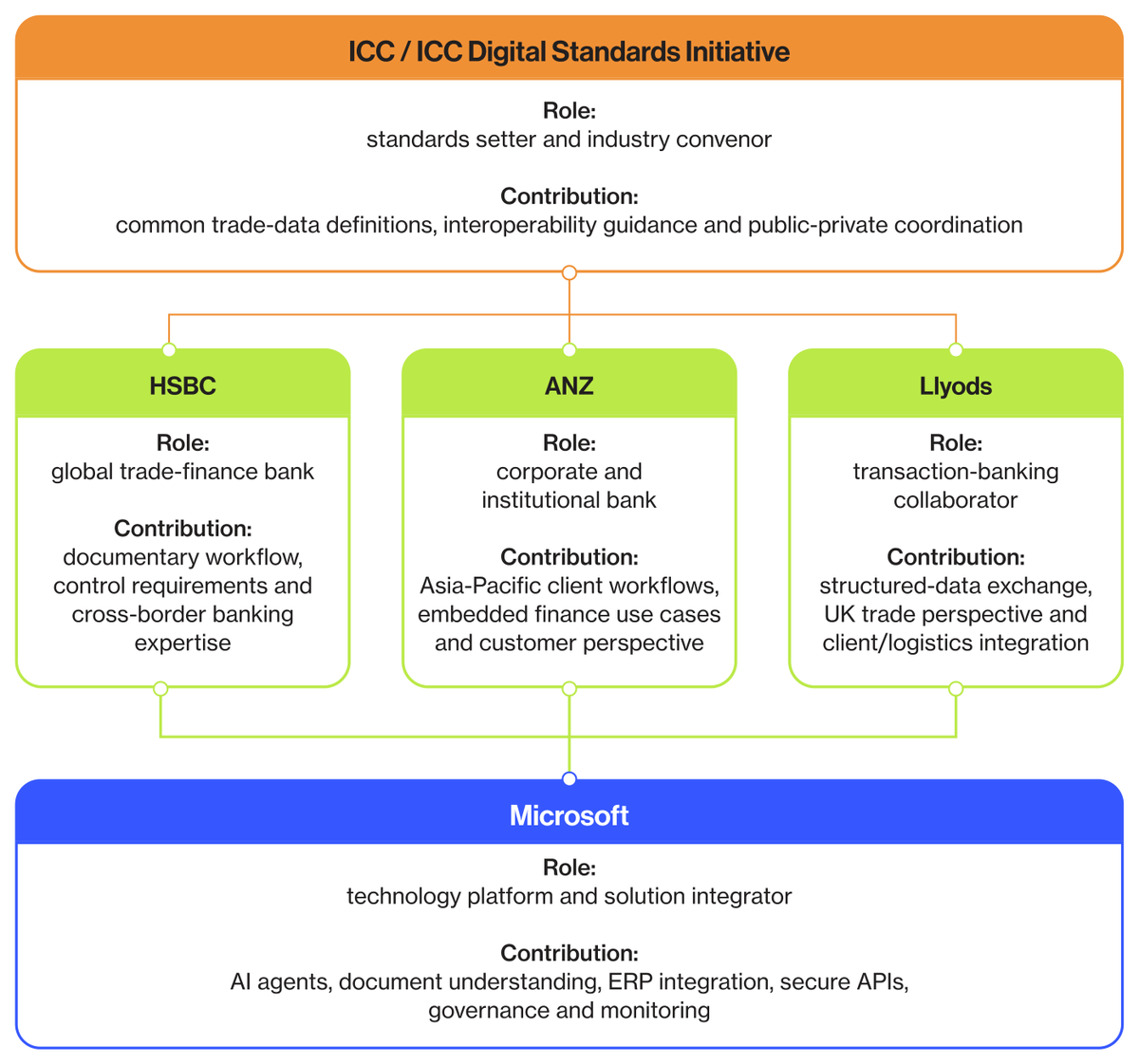
Figure B. Data-to-Value Feedback Cycle
References
Notes
- The author thanks Ms. Betty Ip and Ms. Nor Jibani for supporting this report, and Mr. Cyrus Peng Bo Cheng, Ms. Gao Fei, Ms. Hong Chen Lylian, and Ms. Michelle Rahardja Chandra for their contributions. ↩
- This report uses the OECD’s definition of AI, which is “An AI system is a machine-based system that, for explicit or implicit objectives, infers, from the input it receives, how to generate outputs such as predictions, content, recommendations, or decisions that can influence physical or virtual environments.” [Organisation for Economic Co-operation and Development. (OECD) (2024). Explanatory memorandum on the updated OECD definition of an AI system. https://www.oecd.org/content/dam/oecd/en/publications/reports/2024/03/explanatory-memorandum-on-the-updated-oecd-definition-of-an-ai-system_3c815e51/623da898-en.pdf ↩
- Asian Development Bank (2026). Asian Development Outlook, September 2026. Manila: Asian Development Bank. ↩
- World Bank (2026). Global Economic Prospects, June 2026. Washington DC: World Bank. ↩
- The United Nations Trade and Development (UNCTAD) (2026a). Global Trade Update: Global trade continues to expand amid rising price pressures, July-August. ↩
- International Monetary Fund (IMF). (2026a). United States: 2026 Article IV Consultation – Press Release, April. ↩
- Global Trade Alert. https://globaltradealert.org/ ↩
- The 2026 data is from 1st January to 25th June 2026. ↩
- World Trade Organization (WTO) (2026). Global Trade Outlook and Statistics, March 2026. ↩
- New York. Global Supply Chain Pressure Index. https://www.newyorkfed.org/research/policy/gscpi ↩
- The United Nations Trade and Development (UNCTAD) (2026b). Global Trade Update: Global trade continues to expand amid rising price pressures, July-August. ↩
- The IMF (2026b). Regional Economic Outlook – Asia and Pacific, April 2026. ↩
- Natasha Che, Weining Xin, and Taichi Yoshida (2026). “AI and Economic Divergence in Asia.” IMF Working Paper No. 2026/166, 7 August. ↩
- Centre for Research on the Epidemiology of Disasters (CRED). 2025 Disasters in Numbers: Earth, Wind & Fire (2026). https://files.emdat.be/reports/2025_EMDAT_report.pdf ↩
- The United Nations Economic and Social Commission for Asia and the Pacific (UNESCAP) (2026). Asia-Pacific Disaster Report 2025: Rising Heat, Rising Risk - Policy Pathways for Regional Resilience. ↩
- The Pacific Economic Cooperation Council (PECC). “FTAAP: Pathways to Prosperity”, https://www.pecc.org/pecc/204-issues/957-ftaap-pathways-to-prosperity ↩
- PECC (2026). “33rd PECC General Meeting Concludes.” https://www.pecc.org/pecc/205-member-updates/1013-33rd-pecc-general-meeting-concludes ↩
- PECC (2026). “Enabling AI for Trade Facilitation in the APEC Region”, August. https://www.pecc.org/resources/trade-and-investment-1/2902-enabling-ai-for-trade-facilitation-in-the-apec-region-1 ↩
- Luo Cheng and Nicolas Miailhe (2026). “From Exercise to Cooperation: The 2026 PECC AI Event in Dalian” https://www.pecc.org/pecc/204-issues/1016-from-exercise-to-cooperation-the-2026-pecc-ai-event-in-dalian ↩
- PECC. (2026). ClimateTech in Focus: Artificial Intelligence for Sustainability”. https://www.pecc.org/pecc/208-publications/1008-climatetech-in-focus-artificial-intelligence-for-sustainability ↩
- Boston Consulting Group (2025). “Asia Pacific Leads the World in AI Adoption While Grappling with Job Fears, BCG Survey Finds.” Press Release, 30 October. ↩
- Deloitte (2025). AI for Business: APAC Trends in AI Platform Adoption. Deloitte Insights. https://www.deloitte.com/southeast-asia/en/services/consulting/analysis/ai-business-apac-trends-platform-adoption.html ↩
- Our survey included 146 general observers, 318 intermediate users, 79 advanced users, and 24 professional users. ↩
- 2025 Conference on “Asia-Pacific Artificial Intelligence (AI) Governance Accelerator and Preparing for AI Transformation.” Conference Report. https://www.pecc.org/resources/digital-economy/2856-policy-recommendations-framework/file ↩
- McKinsey & Company (2025), The State of AI in 2025: Agents, Innovation, and Transformation ↩
- Infocomm Media Development Authority, Singapore (2025). Singapore Digital Economy Report 2025. https://www.imda.gov.sg/-/media/imda/files/about/resources/corporate-publications/annual-report/imda-sgde-report-fy2024-2025.pdf ↩
- Asian Development Bank (2026). "AI Readiness and Economic Impacts in Asia and the Pacific." Special topic, Asian Development Outlook, April 2026. https://www.adb.org/sites/default/files/publication/1135881/ado-april-2026.pdf ↩
- In our survey, the number of respondents answering from the large enterprises’ and MSMEs’ perspective are 56 and 80 respectively. ↩
- 2025 Conference on “Asia-Pacific Artificial Intelligence (AI) Governance Accelerator and Preparing for AI Transformation.” Conference Report. https://www.pecc.org/resources/digital-economy/2856-policy-recommendations-framework/file ↩
- United Nations Economic and Social Commission for Asia and the Pacific (UNESCAP) (2026). The Asia-Pacific Trade Facilitation Report 2026: Harnessing Artificial Intelligence in Trade Facilitation https://www.unescap.org/kp/2026/asia-pacific-trade-facilitation-report-2026-harnessing-artificial-intelligence-trade ↩
- Tetiana Schipper (2025). “Exploited Intelligence: AI, Cybercrime, and the Global South’s Digital Struggle.” Journal of World Affairs: 2(1), December. https://doi.org/10.1177/29769442251405945 ↩
- UN Office on Drugs and Crime (2026). “An Interconnected Criminal Ecosystem: Transnational Organized Crime Threat Assessment for South-East Asia”, July. https://www.unodc.org/roseap/uploads/documents/Publications/2026/TOCTA_South-East_Asia_2026.pdf ↩
- UN Office on Drugs and Crime (2025). “Emerging threats: The intersection of criminal and technological innovation in the use of automation and artificial intelligence in the cybercrime landscape of Southeast Asia.” Regional Office for Southeast Asia and the Pacific, September. ↩
- World Economic Forum (2026). The Global Cybersecurity Outlook 2026: Insight Report, January. https://reports.weforum.org/docs/WEF_Global_Cybersecurity_Outlook_2026.pdf ↩
- InMoment (2026). 2026 Asia-Pacific Consumer Trends: The CX Trust Deficit: Loyalty At Risk In The Digital Age. ↩
- International Monetary Fund (2025). "How Artificial Intelligence Will Affect Asia's Economies" (January 2025). ↩
- World Bank (2025) Future jobs in East and Asia Pacific: Robots, Artificial Intelligence, and Digital Platforms in East Asia and Pacific. https://www.worldbank.org/en/region/eap/publication/future-jobs. ↩
- Ibid. ↩
- Ibid. ↩
- Ibid. ↩
- International Monetary Fund. AI Preparedness Index, IMF DataMapper (2023 values). https://www.imf.org/external/datamapper/AI_PI@AIPI ↩
- PECC (2026), Report on “Enabling AI for Trade Facilitation in the APEC Region”, August, p. 7. ↩
- “33rd PECC General Meeting concludes.” https://www.pecc.org/pecc/205-member-updates/1013-33rd-pecc-general-meeting-concludes ↩
- Stanford University (2026). AI Index Report 2026; Asian Development Bank (2026). AI Readiness and Economic Impacts in Asia and the Pacific. ↩
- ADO (April 2026) “Special Topic: AI Readiness and Economic Impacts in Asia and the Pacific—Asian Development Outlook April 2026” https://www.adb.org/sites/default/files/publication/1135881/ado-april-2026-special-topic.pdf ↩
- One example is the workshop on “Combatting Online Fraud and Scams” held on the margin of APEC First Senior Officials’ Meeting in February 2026. ↩
- PECC (2021). Report on “Primer on Economic Integration Issues Posed by the Digital Economy”, 21 October https://www.pecc.org/resources/publications/digital-economy-1/2750-pecc-signature-project-primer-on-economic-integration-issues-posed-by-the-digital-economy-1/file ↩
- PECC (2026). Report on “Enabling AI for Trade Facilitation in the APEC Region”, August. ↩
- 2024 Seminar on "Responsible Adoption of General-Purpose AI." Report. https://www.pecc.org/resources/digital-economy/2774-responsible-adoption-of-general-purpose-ai-1/file ↩
- 2025 Conference on “Asia-Pacific Artificial Intelligence (AI) Governance Accelerator and Preparing for AI Transformation.” Conference Report. https://www.pecc.org/resources/digital-economy/2856-policy-recommendations-framework/file; 2024 Seminar on "Responsible Adoption of General-Purpose AI." Report. https://www.pecc.org/resources/digital-economy/2774-responsible-adoption-of-general-purpose-ai-1/file ↩
- PECC (2026). Report on “Enabling AI for Trade Facilitation in the APEC Region”, August, p. 57. ↩
- Microsoft (2026a). Reimagining Trade Finance with AI: A Collaborative Proof of Concept from Microsoft, ANZ, HSBC, and Lloyds. ↩
- ICC is a private-sector-led, non-governmental business organization representing companies and chambers across more than 170 countries. Through its Digital Standards Initiative, ICC engages governments on regulatory reform and mobilises the private sector around standards interoperability, digital trust and adoption. ↩