By Luo Cheng (CNCPEC) and Nicolas Miailhe (FPTPEC)
24 August 2026, on the margins of the Third APEC Senior Officials' Meeting in Dalian, PECC convened the 2026 PECC AI Event: a tabletop exercise followed by two panel discussions under the theme AI for Good and for All. Designed as a practical contribution to the APEC AI Initiative (2026-2030), it is believed to be the first exercise of its kind held within an APEC Senior Officials' Meeting. Ambassador Zhan Yongxin, Co-Chair of PECC, opened the afternoon, which brought together about forty representatives of governments, business, academia and think tanks from a dozen member economies.
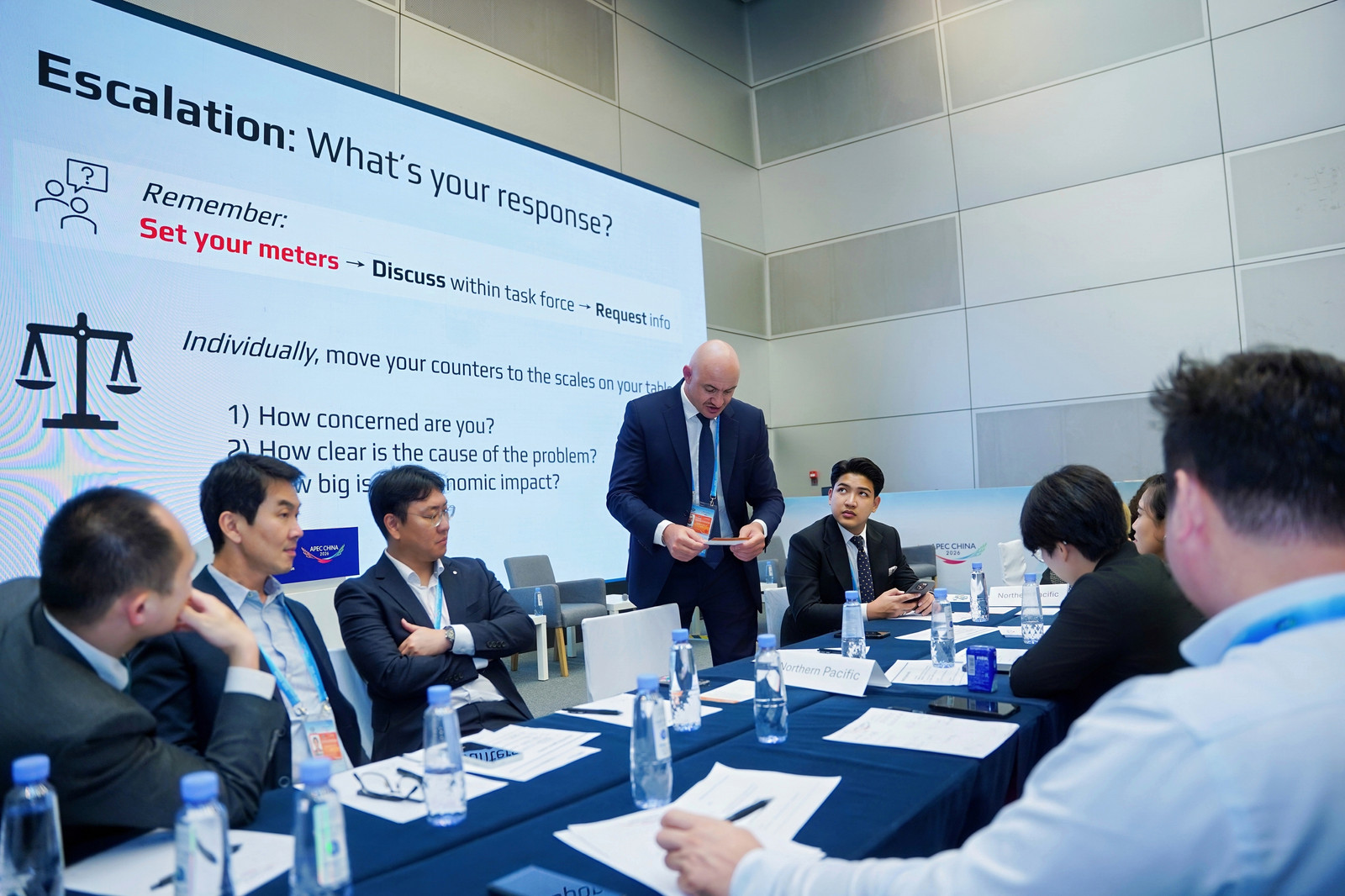 The exercise asked a simple question: when an AI-related disruption crosses borders, do we know who to call? Working in two taskforces through three rounds, participants managed a simulated disruption affecting regional shipping and trade. The scenario referenced no current regional issue and identified no provider and required no technical expertise. At every round, each participant individually recorded their level of concern, their assessment of economic impact and their understanding of the cause, producing a measured record of how the room read the situation as it unfolded.
Four findings stood out. First, the response window opens before the diagnosis is complete: concern and assessed economic impact rose sharply from the second round onward, while participants' understanding of the cause remained low until late in the exercise. This suggests that preparedness arrangements triggered only once a cause has been confirmed will not be in time. Second, the binding constraint proved diagnostic rather than informational: there is currently no accepted way to recognise and categorise AI-related incidents, a gap shared by participants across all economies. Third, cross-border cooperation was improvised and delayed, for lack of a pre-agreed channel that would have made it the natural first move. Fourth, the disruption stemmed from ordinary efficiency-seeking rather than malicious intent: each system performed as its operator intended, and what was missing was a shared framework governing how those systems interacted. Participants characterised this as a market failure of coordination, drawing the corollary that authority may be delegated to a system, while responsibility remains with people.
Working separately, the two taskforces converged on the same requests: a pre-agreed cooperation channel running from the technical level through to trade policy; clear allocation of responsibility with a human in the loop; and cooperation on standards, including a roadmap for the use of AI in trade facilitation with incident arrangements built in, for which the International Maritime Organization was cited as a working precedent.
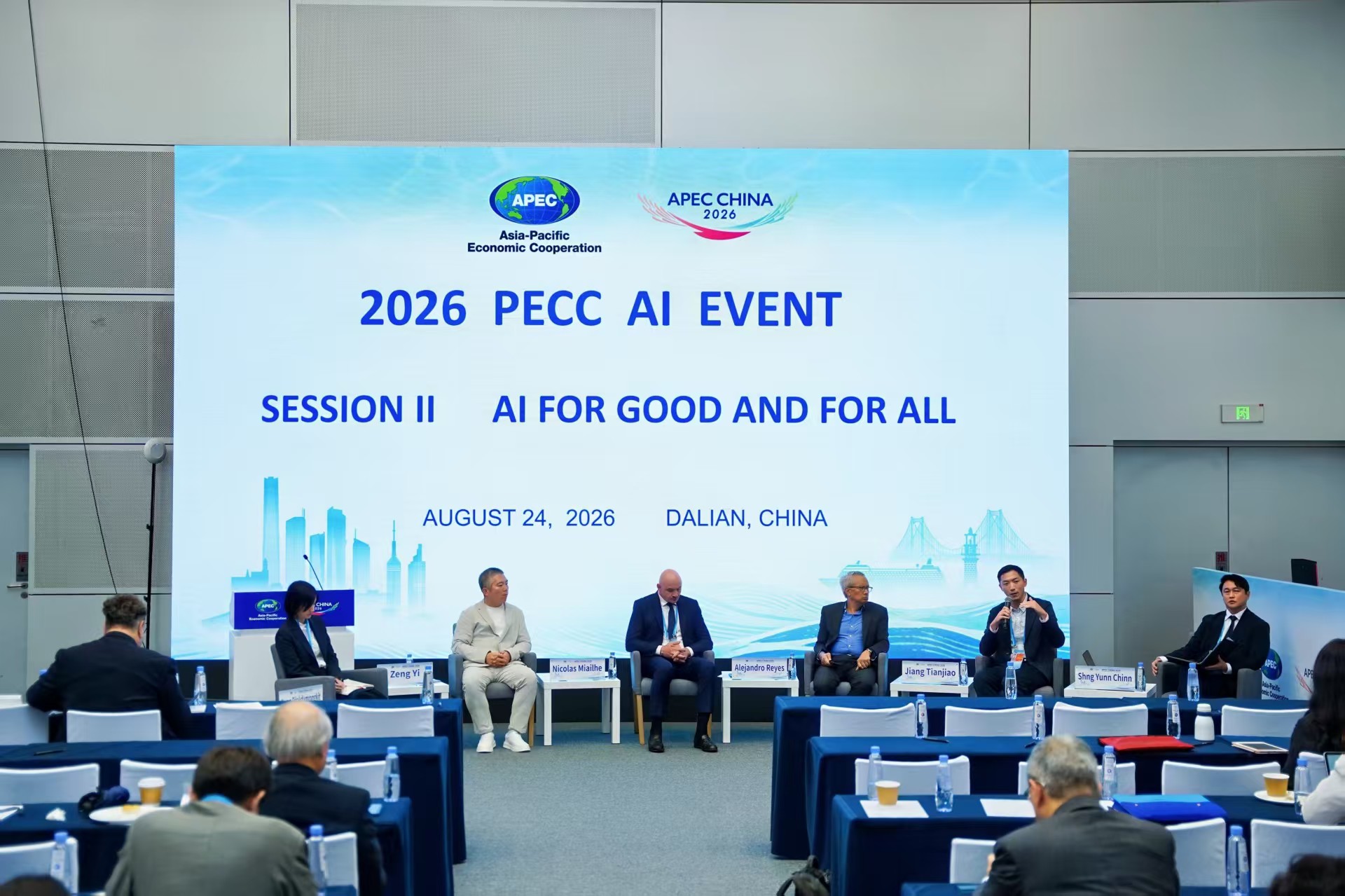 The first panel focused on responsible AI adoption and risk management. Three themes emerged from the discussion. First, growing evidence from AI testing suggests that some advanced systems can behave in ways their operators did not intend or direct. While such cases remain an active area of research, they illustrate why secure and reliable AI development and risks management belong among present-day priorities, and why they are best understood as a condition for innovative growth rather than a brake on it. Second, as technology knows no borders, effective risks management is a shared undertaking among public authorities, the private sector, international organizations and relevant entities across jurisdictions. Third, the resilience of the Asia-Pacific can be enhanced by region-wide arrangements for information sharing, exchange of economy-level experience and crisis-response coordination for AI-related incidents affecting cross-border economic activities.
The second panel examined AI innovations and real-world applications. Three themes emerged from the discussion. First, where regulatory, commercial or legal consequences are involved, human accountability must remain central. Greater autonomy for AI should be introduced progressively and supported by validation, clearly defined operational boundaries and auditability. Second, trust is essential for spurring AI innovation, as businesses are more willing to share data and expertise and to work with other entities when commercially sensitive information is protected. Third, differences in access to investment, reliable energy, digital infrastructure, technical expertise and institutional capacity risk widening the AI divide both within and across economies. This highlights the importance of fostering enabling conditions, promoting capacity building and supporting inclusive digital transformation.
These outcomes fed directly into policy relevance. They underpinned the written PECC contribution to the APEC Policy Dialogue on Digital Economy and AI for Innovative Growth on 25 August, and were briefed to the SOM3 Plenary by PECC's Executive Director, Dr Kaewkamol Pitakdumrongkit, as member economies prepare the Leaders-level document on digital economy and AI ahead of the Economic Leaders' Week in Shenzhen this November.
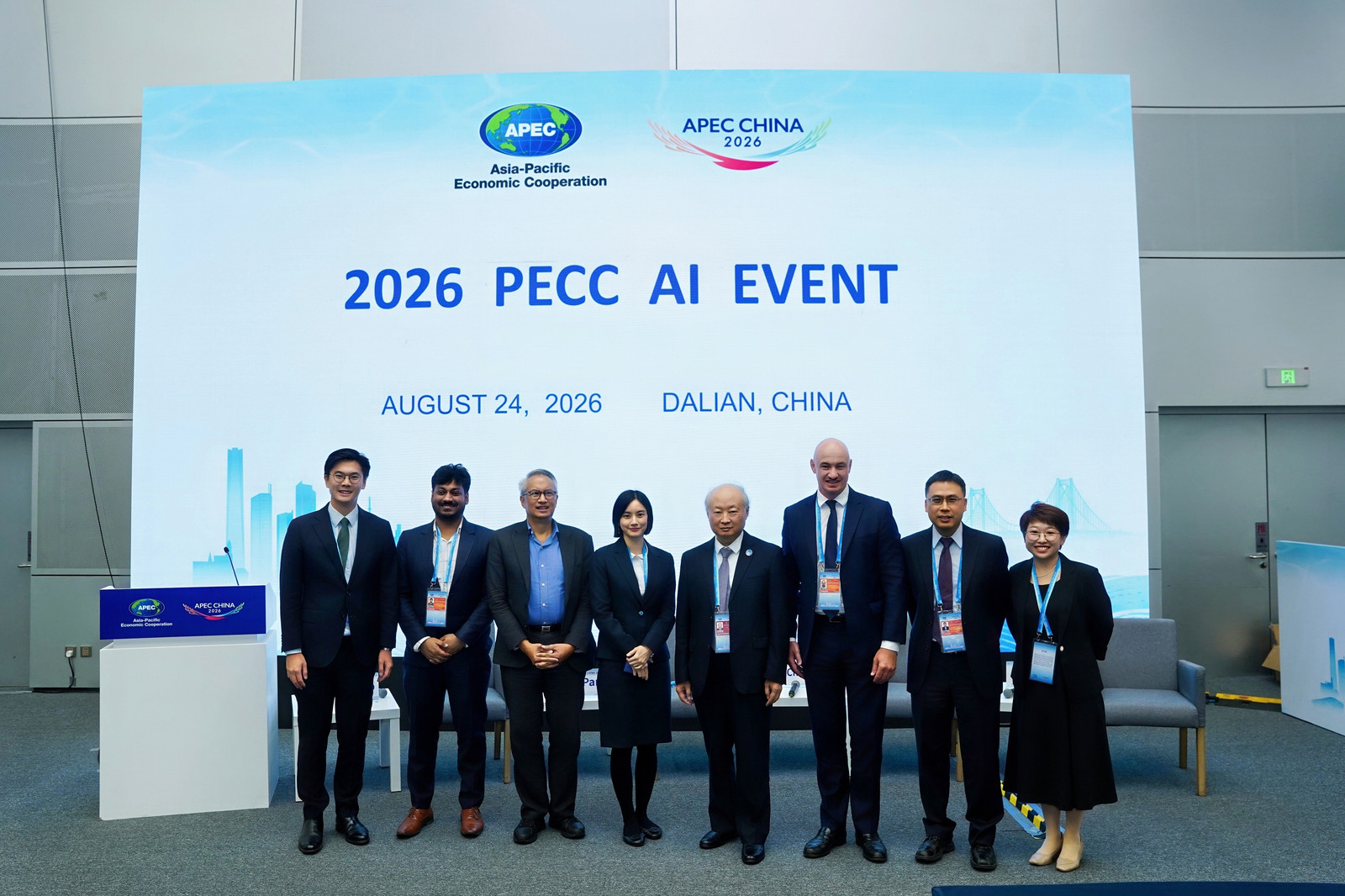
PECC thanks the host and the China APEC team, CNCPEC, the APEC Secretariat and the PECC International Secretariat for making the event possible, and AI Safety Asia, PECC's delivery partner, for the facilitation of the exercise. PECC stands ready to support member economies in taking this work forward, including through recurring exercises and capacity building, so that the region's adoption of AI can proceed at the speed of trust.